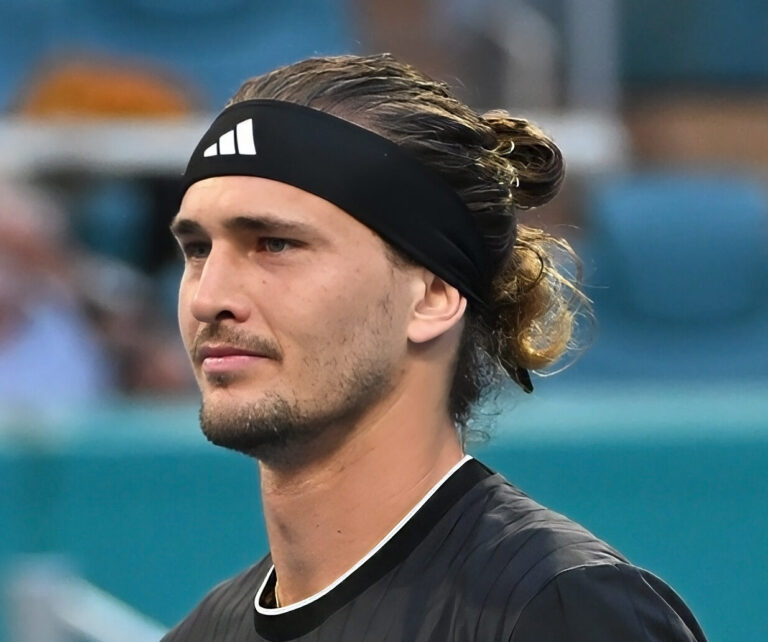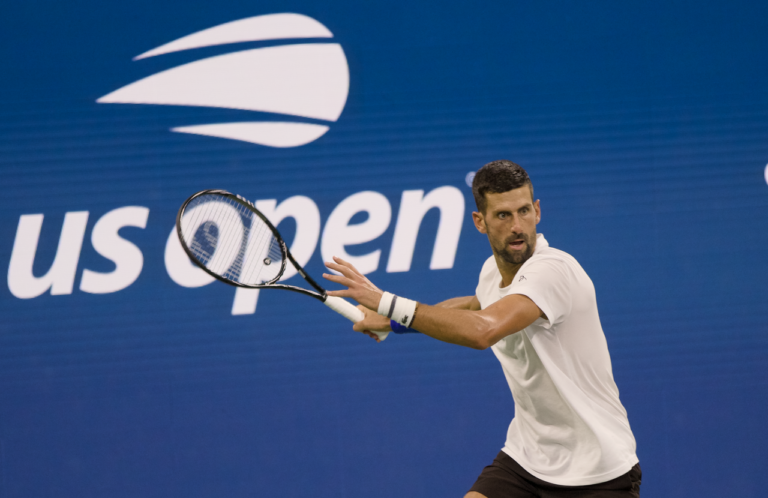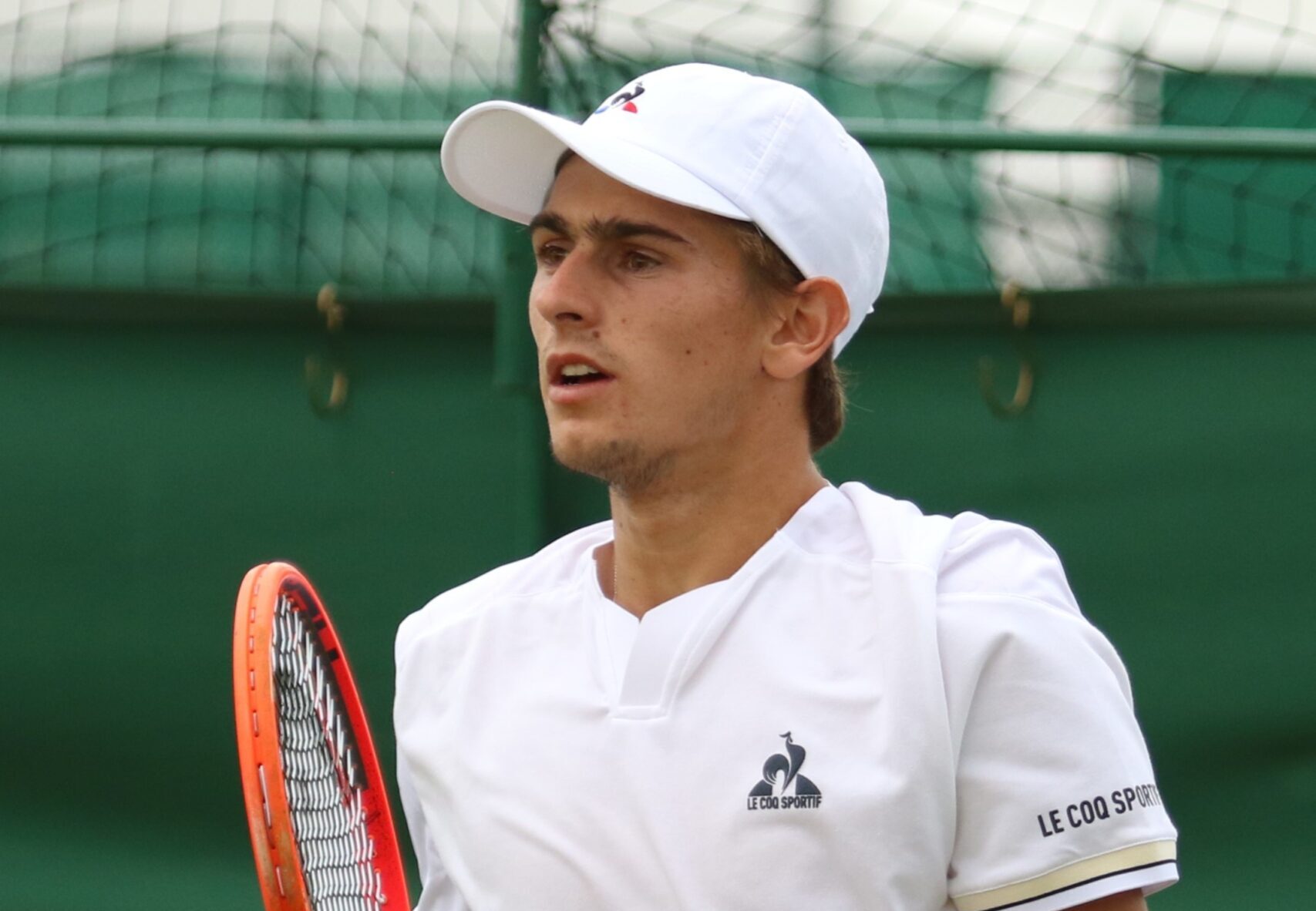
First round in the second week at the legendary French Open, formally the Internationaux de France, and Frances Tiafoe, the last American standing in the men’s singles draw, was fighting like a lion to finish off Matteo Arnaldi in the fourth set and advance to the quarters.
Read more The Emotional Displacement of Losing a Part of Your Community
The young men, mid-20s and just over six feet, both of them, were giving their all. On the court named Suzanne-Lenglen, you can give no less. She was France’s Miss Tennis in the 1920s and as such practically invented women’s tennis, by pushing herself and her great rivals (several of whom were American) to break out of the elegant but, how can one say, genteel game the ladies had been playing since the sport was invented, very nicely thank you but without too much visible stress and strain. (RELATED: Hot Days at Roland-Garros)
Stress and strain were on display until one o’clock in the morning as Tiafoe and Arnaldi played one of the most sensational five-set matches ever seen on these grounds of sensational five-set matches, including already several during the rounds of the first week and last year’s already-legendary final (played on the nearby Philippe-Chatrier court) between Jannik Sinner and Carlos Alcaraz. The latter is out of action with a wrist injury, and the former, after an undefeated run through the clay season, of which the French Open is the culmination, got sick and crumbled when leading two sets to zero and only a few points away from game, set, match. (RELATED: Americans Advance at French Open)
Hand it to both of them, for tenacity and heart, they both deserved it: the very definition of a great match between great athletes.
The American and the Italian traded the first two sets with wins in tiebreaks, then Arnaldi dictated the third. But Tiafoe — who grew up in Hyattsville and College Park in Maryland and attended DeMatha Catholic High School, a renowned academic and sports powerhouse in the Washington, D.C., region — very nearly had him in the fourth, ahead 5-4 and on serve. Arnaldi played with sensational (I know, but what else?) defensive heroics, catching shots anyone would view as sure winners and attacking with breathtaking down-the-line winners from the baseline that even the fleet-footed tenacious Tiafoe could only look at. He saved the game and went on to break and hold on to take the third tiebreak of the match. In the deciding set, five and a half hours into the match, he got through some close calls to get a second lead from 4-4, closed with a break and a hold. [Arnaldi def. Tiafoe 7-6 (5), 6-7 (5), 3-6, 7-6 (3), 6-4.]
Hand it to him, after a series of injuries that put him over 100 in the rankings (Tiafoe is at about 30 and was seeded 19), the San Remo native earned it. Hand it to both of them, for tenacity and heart, they both deserved it: the very definition of a great match between great athletes.
With Frances Tiafoe out, that’s it for Americans. Madison Keys had lost earlier in the day to Diana Shnaider in a match that was fine until the third, when Miss Keys, well-beloved by American fans for her good nature and, too, tenacity, ran out of gas and got bageled. She was, typically, very sweet at the end, giving the young Russian a warm hug at the net. (Shnaider def. Keys 6-3, 3-6, 6-0.)
Which hug one could not help but notice, given that Miss Shnaider, who is only twenty-two, was denounced by the fiery, outspoken Ukrainian player (whom she beat in the previous round), Oleksandra Oliynykova, because, basically, she is Russian, and, moreover, she recently played in a tournament near her hometown that Miss Oliynykova claimed was state-sponsored. She compared it to playing in Nazi Germany during World War II.
This is why sports and politics make a bad mix. But whatchagonnado? Miss Shnaider, who has a typically Russian girl’s features and a smile to melt the room (or the stadium) — she speaks excellent American English, too, attended North Carolina State for a year — said without a trace of guile that she tours all year and this was a chance to play with her friends and family in attendance and she had no idea who the tournament sponsor was.
Read more Riding Into Town on a Rainbow Stagecoach
The Ukrainian women have been following a protocol of not shaking hands at the net with Russians and Belarusians due to the war against their country (Kyiv was bombed again just yesterday), and it is surely within their rights to make this symbolic gesture to remind the world their friends on the men’s side are not in the draw because they are in uniform fighting for their country’s survival.
The relevant institutions — the tournament, the players’ associations — try to square an impossible circle. I must say they can be clumsy, but that is to be expected of institutions. The American Olympic Committee, you will recall, was pretty bad in its time, and for all I know it still is, caving to Nazi demands to ban Jews, for example, at the 1936 Berlin Games and very nearly banning the great Jesse Owens, who made it clear he was running for, if not with, his Jewish teammates. (FDR did not send Owens a telegram to congratulate him, let alone invite him to the White House. TR probably would have.)
And consider this, where institutions are concerned: a Paraguayan player lost a great five-set match to a 17-year-old French phenom and complained that the umpire was inadequate because she was a woman, couldn’t deal with the tension and excitement (the crowd in particular was, not unreasonably, rooting for their homie). Okay, not very polite, rather boneheaded thing to say, but the tournament got mad and fined the fellow $65,000. Go figure.
Obviously not important compared to the horrors in Eastern Europe. But given the place, the history, it will go down as a footnote, eventually become a legend, forgotten or misconstrued by most.
The Roland-Garros Stadium was built in 1928 specifically to have a venue for the France team to defend the Davis Cup, which they had wrested from the USA at Philadelphia the previous year. The Americans were led by the dominant player of the age, Bill Tilden, who won a five-set thriller against René Lacoste in the first match of the series. It was no accident, Lacoste wanted to tire the top player in the world, and he was an expert at keeping the points long. In his second singles, Big Bill was exhausted and could not take even a set from Henri Cochet. The French took the series 4-1 and maintained their dominance into the early ’30s.
American tennis came back, of course, with Don Budge and others. We, and the French, won the Davis Cup again, most recently in 2007 and 2017, you can look up which and when; however, the Davis Cup has long fallen behind other events in fan interest, notably these majors, or “opens,” where neither we, nor the French, have shone in the men’s draws lately. Haven’t seen many amateurs invited to play lately, either, though isn’t that what the Open is supposed to mean? Or was it the other way around, pros invited to amateur tournaments?
Another controversial, or political, question? Dunno. There will be no American or French players in singles in the final days at this Roland-Garros, but Taylor Townsend may well get to the final in doubles with her Czech co-star Kateřina Siniaková, and Asia Muhammad may get there in the mixed, with the outstanding Croatian Nikola Mektić.
Read more ‘Reverse Okies’ and Blue State Refugees — Another Wave Appears To Be Building
As it should be, on the courts, talent wins. And character.
READ MORE from Roger Kaplan:
Hot Days at Roland-Garros
Elina the Great, Again
Image licensed under Attribution-ShareAlike 2.0 Generic.
About the Author