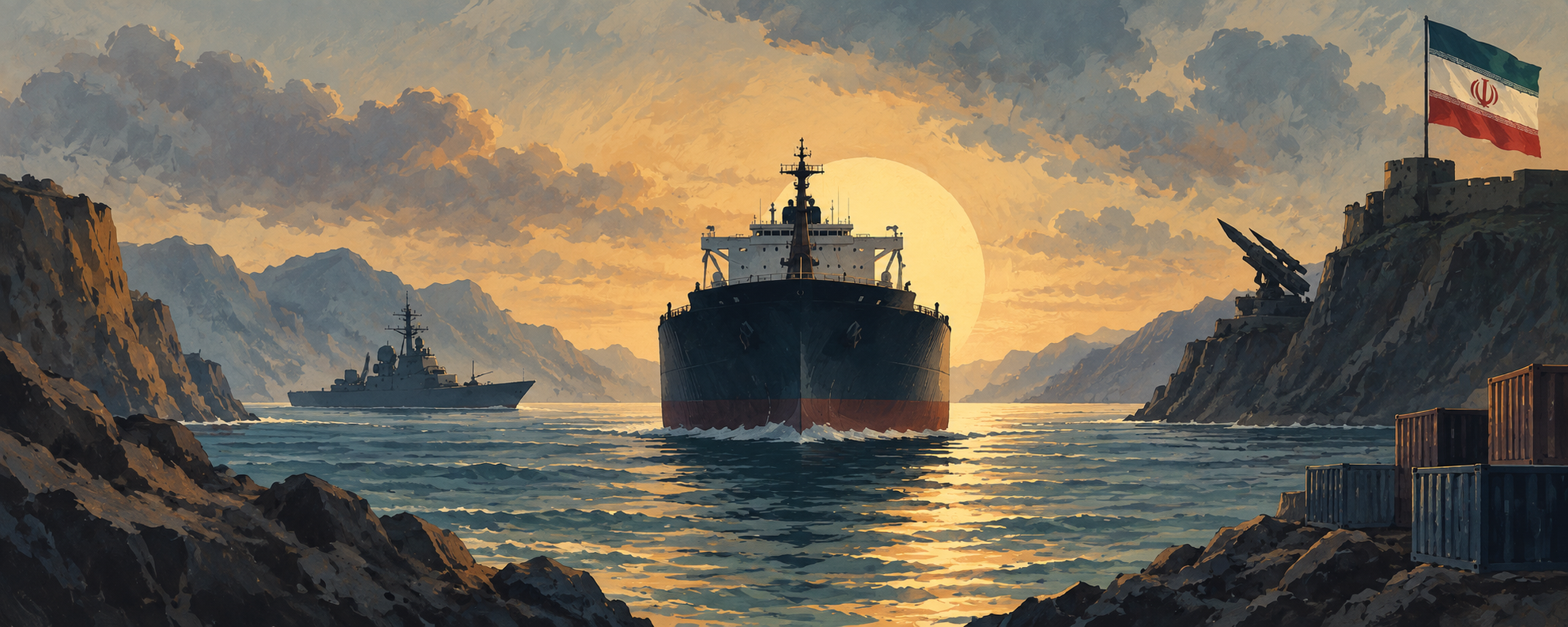
The Strait of Hormuz is where a right of navigation meets the realities of war. A ship may have a right to pass through an international strait, yet its owner must still decide whether to expose a crew and cargo to attack, whether insurance will respond, and whether the charterparty permits a refusal to sail. Since the Middle East conflict began on Feb. 28, 2026, those decisions have become urgent for vessels serving the Persian Gulf. They depend on the actions of both the United States and Iran, and on the gap between political assurances and conditions at sea. As Nicholas Monsarrat lamented in his 1953 novel The Cruel Sea, “The only villain is the sea, the cruel sea, that man has made more cruel.”
Read more The Feds Are Closing In on Newsom — and His Corporate Bankrollers
On Sep. 16, the International Maritime Organization (IMO) said it had verified 80 attacks on merchant vessels in and around Hormuz, with at least 22 seafarers killed since the conflict began. The IMO expressly cautioned that the attacks were not attributable to one country alone. Its figures describe the human and commercial danger; they should not be read as an attribution of every incident to Iran. That distinction matters in an article about responsibility, but it changes little for a master assessing a proposed transit. The cruel sea does not take sides.
The Trump administration has tried to use American financial and naval power to restore passage while pursuing a military campaign and economic pressure against Iran. In early March, President Trump directed the US International Development Finance Corporation (DFC) to offer maritime political-risk support, and the administration raised the possibility of naval escorts. DFC subsequently described a facility of up to $20 billion in rolling reinsurance capacity; Chubb was announced as a lead private insurer later that month. These were proposals to make some voyages more insurable, not an undertaking that every vessel would obtain cover or an escort. The distinction between announced capacity and protection available for a particular voyage is critical. (RELATED: Shipping Interruption in Persian Gulf Is Yet Another Reminder of the Risks of Offshoring)
The president’s public language also changed the commercial calculation. On March 31, he said that other countries dependent on Hormuz should secure their own supplies and passage. On April 12, he announced a U.S. naval blockade. U.S. Central Command then specified a narrower operational measure: a blockade of traffic entering or leaving Iranian ports and coastal areas, applying to ships of all nationalities, while saying that vessels bound to or from non-Iranian ports would not be impeded in transiting Hormuz. Calling this a blockade of all shipping through the Strait would misstate the announced scope. It nevertheless created a fresh risk for ships trading with Iran and a need for everyone else to document their destination and cargo.
This sequence affects confidence in several ways. A promise of escorts may encourage charterers to arrange voyages; however, uncertainty about timing and availability makes owners less willing to rely on that promise. A blockade may be presented as preserving non-Iranian transit while increasing the possibility of Iranian countermeasures, and therein lies the difficulty. Presidential comments can affect expectations and pricing, but it would overstate the evidence to say that a particular statement caused a particular premium or attack. Changing U.S. policy signals became another variable for insurers, owners, and charterers already facing physical danger.
Geopolitical tension has exposed the gap between a right recognised by international law and the practical ability to exercise it.
Iran has sought to exert influence over passage through the Strait in response to the war and U.S. pressure. Its actions and threats increase the possibility that a ship will encounter hostile activity. The Iranian body, the Persian Gulf Strait Authority, reported in September that it had listed 77 vessels as violating its transit protocols. It threatened consequences for listed ships and reportedly warned insurers and other maritime service providers against dealing with them. These are Iranian assertions of control, not an internationally accepted licensing system or a finding that the listed ships broke international law. Geopolitical tension has exposed the gap between a right recognised by international law and the practical ability to exercise it.
Iranian pressure reaches beyond a missile strike or seizure. A threatened detention can interrupt a voyage without damaging the hull. An insurer may ask whether a vessel has been identified on an Iranian list; an owner may ask whether its flag, beneficial ownership, cargo, destination or prior port calls attract attention. A charterer may regard an owner’s refusal as excessive when other vessels are passing. This is how state conduct becomes a private dispute about the terms of a fixture. The IMO’s account cautions against a simple story in which one state alone creates every maritime hazard. Whatever a party’s political view of U.S. strikes or Iran’s response, a prudent risk assessment must address the actual threat to that vessel at the time of the order. The right of transit passage through an international strait remains a central rule of the law of the sea. The IMO stresses that it cannot be suspended. That legal right does not guarantee safe passage, affordable insurance, or a contractual obligation to proceed, however.
Maritime business may therefore become more dependent on insurance. The first question is which risk is covered. Hull and machinery insurance protects the ship against specified physical losses; war-risk cover addresses defined hostile perils; protection and indemnity (P&I) concerns many third-party liabilities; and cargo interests arrange their own cover. Policies differ in exclusions, cancellation provisions, territorial limits, notice requirements, and additional premiums. None of these protections should be described simply as “the ship is insured.” A U.S.-supported facility might improve the supply of cover for qualifying voyages, but it does not itself resolve every policy exclusion, sanctions issue, P&I exposure, or practical objection to sending a crew into danger.
The DFC’s proposed $20 billion reinsurance facility therefore has two possible effects. If underwriters can quote usable cover and owners can rely on its terms, it may ease a bottleneck in trade. If the facility is delayed, narrowly available or too expensive for a particular cargo and voyage, the headline figure does little for that fixture. The charterparty must identify who pays any additional premium and how other costs and risks are allocated. A political assurance cannot replace a firm insurance quotation or an assessment of escort availability.
Read more The State’s Assault on Press Freedom the Fourth Estate Ignored
Iran’s threatened measures add another uncertainty. A voyage may face an increased premium because it involves a listed ship, an Iranian port, a contested route or a risk of detention. An Iranian notice to insurers has no automatic effect on an English insurance contract; the policy wording and actual exposure remain decisive. It may nevertheless alter underwriting appetite. Owners and charterers should check the vessel and cargo against applicable sanctions, the policy and war-risk endorsements, and the exact route before asserting that the voyage is either prohibited or fully covered.
English law shows how carefully these costs must be allocated. In Herculito Maritime Ltd v. Gunvor International BV (The Polar) [2024], the U.K. Supreme Court considered the relationship between war-risk provisions, the charterparty, bills of lading and a general-average claim after a vessel was seized by pirates. The case does not provide a universal rule for a Hormuz attack; it shows why one must read each contract before concluding that insurance has displaced a claim against another party. After the ransom, the shipowner sought a general-average contribution from the cargo interests: a share of an extraordinary expense incurred to save the ship and cargo together. The cargo interests argued that the owner should look only to the insurance. The U.K. Supreme Court held that the requirement to pay the extra premium did not, by itself, make insurance the owner’s exclusive remedy. The owner could still claim a general-average contribution from the cargo interests. The lesson is to check the charterparty and bills of lading before saying, “Insurance will pay, so the charterer or cargo interests owe nothing.”
A charterer, often a company arranging the use of the vessel, wants the agreed voyage performed. Yet an owner must protect its ship and crew and comply with its insurance arrangements. The result depends chiefly on the war-risk clause incorporated into the charterparty, not merely on whether politicians describe the situation as a war. BIMCO updated its standard time and voyage charter war-risk clauses in 2025. CONWARTIME 2025 and VOYWAR 2025 address exposure to war risks, alternative orders, and the allocation of resulting costs. The key legal question is whether the master or owner has reasonable grounds to regard the voyage as dangerous under the charterparty’s war-risk clause. Recent attacks and official warnings may be relevant. An owner does not have to wait until its own ship is attacked. Equally, a general claim that “the Gulf is unsafe” may not be enough to justify refusing an order. Geopolitical conflict creates practical difficulties for trade that can affect ships, cargoes, and ports far beyond Hormuz.
The cases show why the wording of the contract matters. In The Product Star (No 2), the court considered a risk that the parties had already taken into account when making their agreement. But there is no general rule that an owner can refuse an order only if the risk has increased since the charter was signed. The Triton Lark shows that a danger can be serious enough to justify concern even if an attack is less likely than not. The Paiwan Wisdom confirms that the answer depends on the particular contract and circumstances. There may also be a safe-port issue. Under the test in The Eastern City, a nominated port must be one that the particular ship can reach, use and leave without encountering danger that good navigation and seamanship cannot avoid, apart from an abnormal occurrence. A Gulf port might be operating normally while its approach has become dangerous. Whether that makes the port contractually unsafe depends on the facts and the terms of the charterparty.
Finally, danger may force a ship to change route or prevent it from completing the voyage. The Suez Canal cases, Tsakiroglou and The Eugenia, show that a longer or more expensive voyage does not, by itself, end the contract through frustration. The Sea Angel requires the court to consider the contract and the full circumstances. If a Gulf voyage truly cannot be performed, frustration may be arguable. But the parties should first check what their war-risk and other contractual clauses say.
The public right of passage remains. Alas, routine commercial confidence has not returned. On Sep. 18, Reuters reported that only four commodity vessels had made a recorded transit the previous day, against a 10-day average of about 16. Those preliminary tracking figures can change because some ships switch off their transponders; they indicate disrupted traffic, not a complete vessel count. The IMO’s Sep. 16 total of 80 verified attacks and 22 deaths makes it difficult to treat the danger as merely theoretical.
War around the Strait of Hormuz has turned a right of passage into a practical question of safety, insurance, and contractual responsibility. U.S. military measures, Trump’s changing statements, and proposed insurance support have affected confidence in shipping. Iran’s threats and attempts to control transit have added risks of attack or detention. Yet neither political assurances nor the legal right to pass through the Strait guarantees that a particular voyage is safe or insured. For shipowners and charterers, the answer lies chiefly in their contracts: can an owner reasonably refuse a dangerous order, who pays extra insurance costs, and what happens if a port or route becomes unsafe? The whole saga highlights the importance of resuming a geopolitical stability of sorts.
In an unstable strait in unstable times, the answer lies in careful drafting and a sober appraisal of what protection is available at the cruel sea.
Read more Newsom’s Affair Partner Reveals She Was Blackout Drunk During Encounters
READ MORE from Brian Patrick Bolger:
Potemkin Power: Why Russia Is the Real Loser in the New Geopolitics
International Law Is Not Protecting Individual Safety
Ursula von der Leyen: A Wolf in Sheep’s Clothing
About the Author