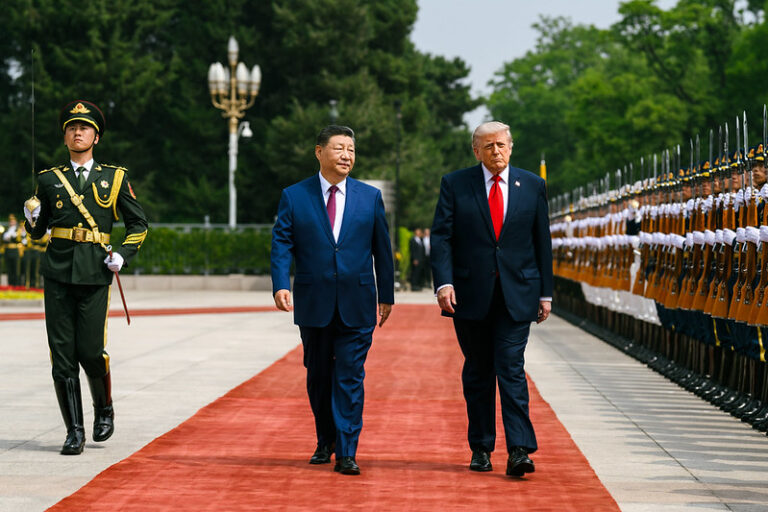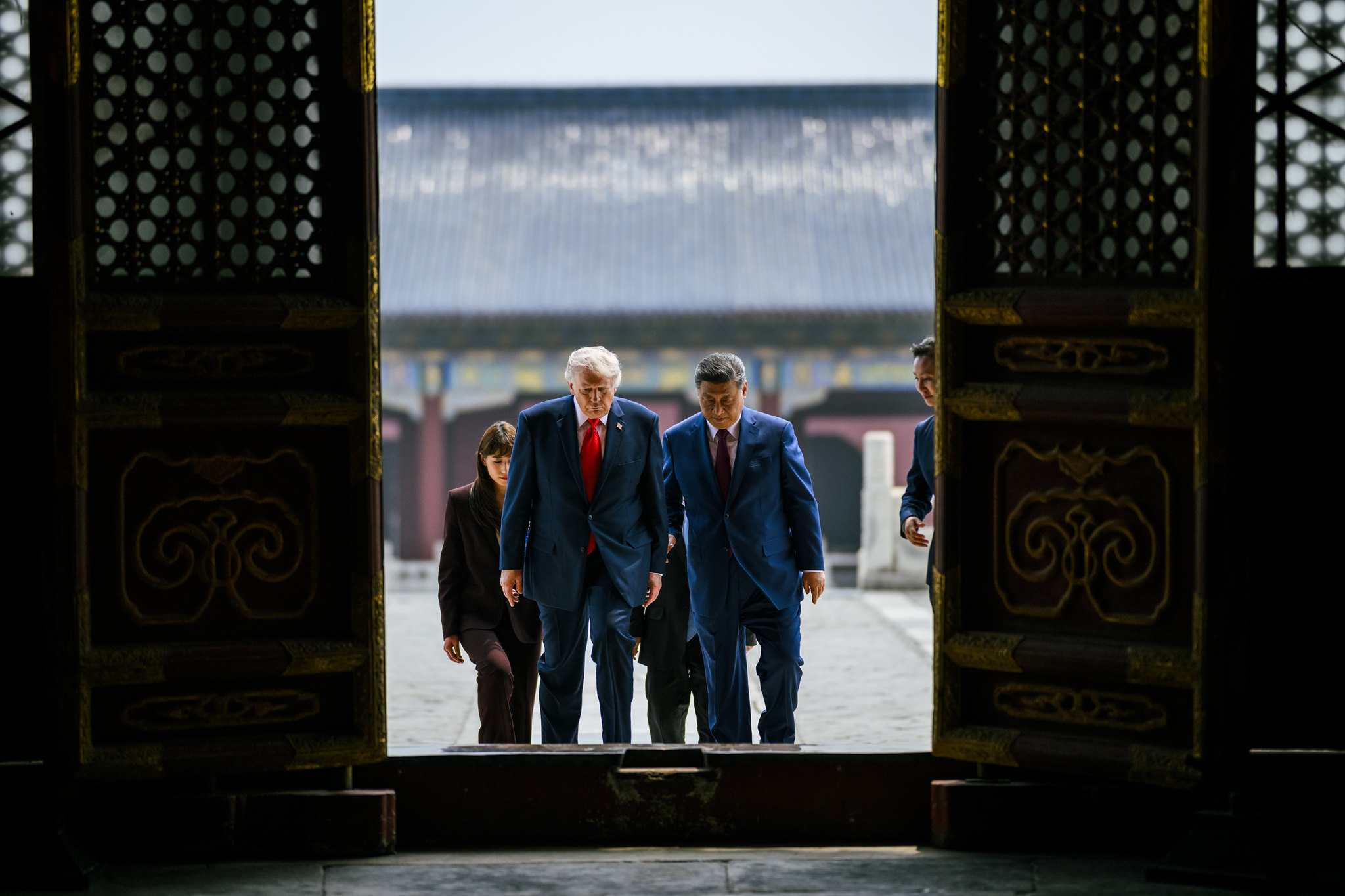
The eyes of the world were on President Donald J. Trump and Chairman of Everything Xi Jinping at their high-profile summit in Beijing earlier this month. But behind the sunny scenes of cheering children and marching soldiers, China’s economic mischief continued in the shadows.
Read more The View ’s Joy Behar Is Furious TrumpRX Is Lowering Drug Costs
White House science advisor Michael Kratsios has accused China of “industrial scale” theft of U.S. artificial-intelligence technology. In an April 23 memorandum, he added: “There is nothing innovative about systematically extracting and copying the innovations of American industry, and there is nothing open about supposedly open models that are derived from acts of malicious exploitation.”
China may have gained a short-term advantage by using unauthorized American AI expertise in its manufacturing processes. But that approach could impose serious legal and economic consequences on Chinese exporters. Beijing’s step forward with the unapproved use of AI in its factories may cause a great leap backward in its manufacturing dominance.
If Chinese products were created via patent-infringing manufacturing techniques, the International Trade Commission (ITC) has the authority to halt those items from being imported into the USA.
For decades, I have developed AI-based manufacturing technology. My patent claims date back to 1984. Congress anticipated precisely this kind of dispute long ago: foreign manufacturers using patented American production techniques without permission to make goods for export to the USA. In response, lawmakers in 1988 enacted 35 US Codes § 271(g) and § 295. These provisions protect against imports made via methods patented in America.
These statutes are powerful trump cards for trade negotiations. If Chinese products were created via patent-infringing manufacturing techniques, the International Trade Commission (ITC) has the authority to halt those items from being imported into the USA. The ITC may issue a General Exclusion Order that would prohibit entire categories of imported products.
That distinction matters. The U.S. Supreme Court curbed presidential authority over tariffs. In Learning Resources v. Trump, the Court ruled on Feb. 20 that Congress — not the Executive Branch — possesses primary constitutional authority to restrict trade. This power relies not on tariffs, but on acts of Congress that may exclude products from patent-infringing foreign factories. (RELATED: The Court Strikes, But the Tariffs March On)
These statutory remedies are even tougher than tariffs. Tariffs merely raise prices. Exclusion Orders stop imported products cold — right at the border. U.S. longshoremen respect such restrictions and would block offending goods, like a great wall.
Read more Advice for Ken Paxton
America’s chief economic rival teems with plants that employ manufacturing methods that encroach on US technology. “China has built over 30,000 basic-level smart factories as part of a nationwide push to accelerate industrial digitalization and intelligent upgrading, according to the Ministry of Industry and Information Technology,” the official Xinhua News Agency reported on Feb. 13, 2025. These efforts include “smart warehousing, AI-powered quality inspections, and digital research and development.”
These are exactly the kinds of factories that could deserve the legal scrutiny that Congress intended when it enacted these statutes 38 years ago.
The U.S. Patent and Trademark Office also has contributed to the status quo. The decades of delays in issuing a patent on my allowable AI intellectual-property claims likely enabled widespread, unauthorized foreign use of technology that should have received full patent protection ages ago.
Unfortunately, America is in a difficult negotiating position with China at a moment of heightened trade tension. My colleagues and I have spent years urging policymakers to recognize the strategic importance of these patent-based trade remedies. They provide a far stronger and more durable negotiating posture than tariffs alone.
This work has consumed nearly 40 years of toil and tens of millions of dollars in investment. Yet my goal is not commercial.
I am preparing to launch the non-profit Pioneering AI Foundation as a gift to America on its 250th birthday. I plan to assign my AI patents to the Foundation and continue my philanthropic work. The PAI Foundation will shield American workers and companies from unfair foreign competition and invent and develop AI capabilities. These include creating a super-educated generation through early learning, making schooling fun from a young age, and other initiatives to help strengthen the country’s future.
America has given extraordinary opportunities to my family and me. The Pioneering AI Foundation is one way for me to express my profound gratitude to this nation for the abundant blessings that it has bestowed upon us.
Read more When Grown Men Enter High School as Children
God bless America, land that I love.
READ MORE:
The USA Can Dominate AI and Make STEM Great Again
There’s No Reason to Fear an Invasion of Chinese Electric Vehicles
Constructive Engagement: Are We Going to Do This Again?
Gil Hyatt is a Las Vegas-based engineer, scientist, inventor, and entrepreneur.
About the Author