A move from Hawaii to the mainland involves considerably more coordination than loading a truck and driving to another state. Household belongings must leave an island, connect with mainland transportation, and eventually reach a new residence that may be thousands of miles away. For families managing work changes, housing transitions, or a return to the mainland, the logistics can quickly become complicated.
Professional movers help turn that complexity into a sequence of manageable steps. From the first household assessment to final delivery, each stage requires preparation, communication, and attention to how belongings will move between different forms of transportation.
Starting With the Household Assessment
The process begins long before moving day. A moving team needs to understand what the household contains, how much space those possessions require, and whether any items need special preparation.
Homeowners can begin by reviewing their furniture, appliances, boxes, outdoor equipment, and fragile possessions. A detailed inventory helps movers estimate the shipment and determine the appropriate transportation arrangements.
Using https://hawaiimovingservices.com/ as a starting point can help customers organize the different services involved in a long-distance relocation.
Deciding What Makes the Journey
An island-to-mainland move is also an opportunity to reduce the shipment before transportation begins. Heavy furniture that will not fit the new home, outdated appliances, and rarely used belongings may not justify the space they occupy.
Separating everyday necessities from items intended for the new residence can make packing and unpacking more efficient.
Preparing Household Goods for Departure
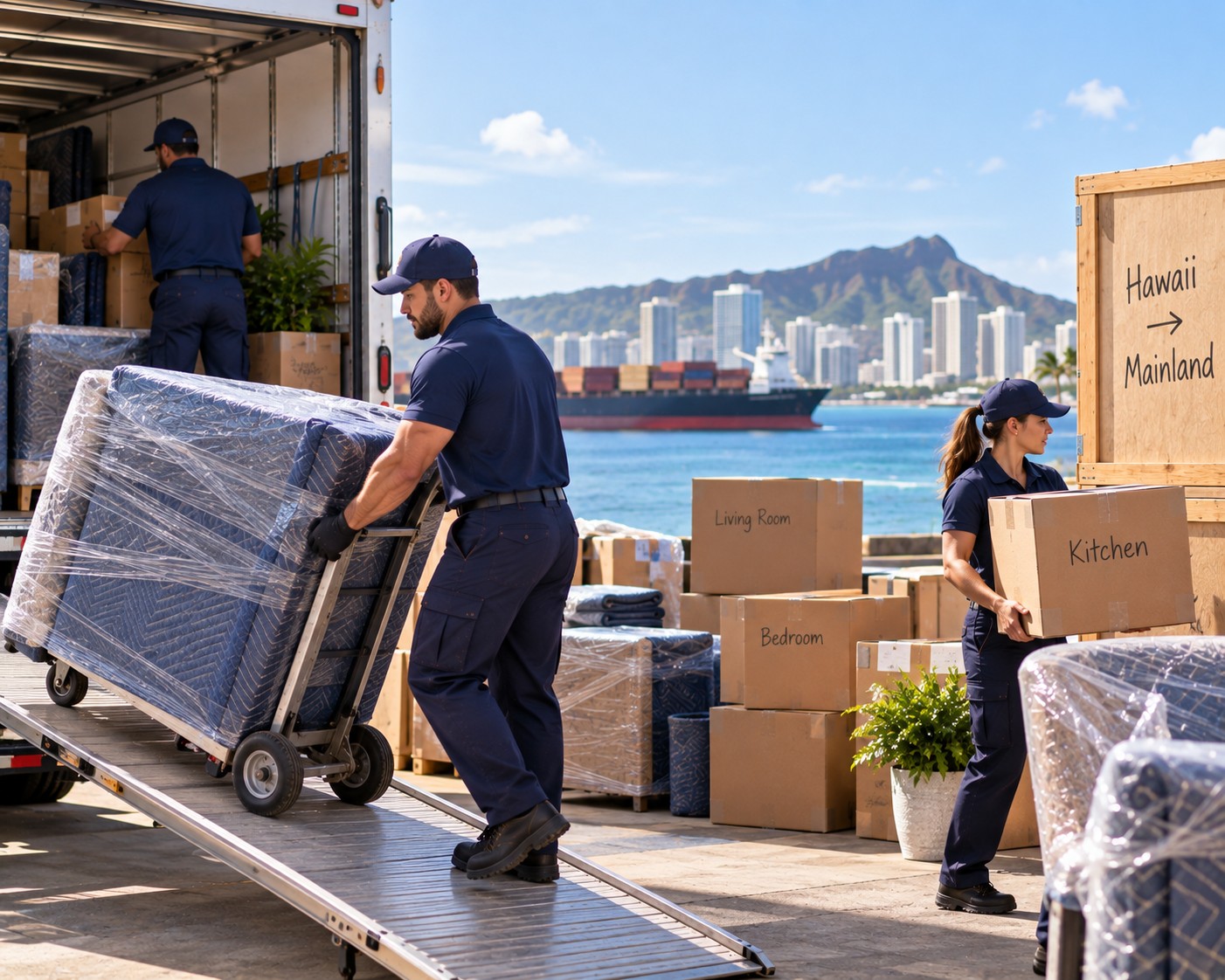
Once the inventory is established, movers can prepare the shipment for handling. Furniture may be wrapped, disassembled, and protected at vulnerable edges. Fragile belongings require appropriate cushioning, while boxes should be sealed and labeled according to their contents or destination room.
The objective is not simply to make everything fit into a shipment. Each item needs to be prepared for handling at multiple points during the journey.
Giving Special Attention to Fragile Items
Artwork, mirrors, glass furniture, electronics, ceramics, and antiques may require additional protection. Movers can determine which pieces need individual wrapping, reinforced containers, or specialized handling.
Clear labeling also helps the team recognize items that require additional care during loading and unloading.
Coordinating Island Transportation
The island portion of the move introduces logistical considerations that do not exist in a typical mainland relocation. Household goods need to reach the appropriate departure point before continuing toward the mainland.
Professional movers coordinate the movement of packed belongings from the residence through the transportation network. Access to the property, parking conditions, building restrictions, and pickup timing can all affect this stage.
For customers reviewing https://hawaiimovingservices.com/long-distance-moving-hawaii/, understanding the broader long-distance process can make it easier to prepare questions about scheduling and delivery.
Managing the Mainland Connection
Once household goods reach the mainland, another phase begins. The shipment may need to connect with trucking and local delivery arrangements before reaching the customer’s new residence.
This requires accurate destination information and communication between the different stages. If the delivery address changes, the customer should provide updated details as soon as possible.
A professional moving team can also account for access challenges at the destination, including apartment elevators, narrow streets, gated communities, limited parking, or building delivery windows.
Keeping the Customer Informed
Long-distance moves can feel uncertain when customers do not know what is happening between pickup and delivery. Communication therefore becomes an important part of professional moving coordination.
Customers may need updates about scheduling, transportation milestones, delivery arrangements, or changes affecting the planned timeline. Keeping documents, inventory information, and contact details organized makes those conversations easier.
Preparing the New Home
The destination should be ready before the shipment arrives. Clear pathways, accessible entrances, reserved elevators, and available parking can make delivery significantly smoother.
It is also useful to decide where major furniture should go before unloading begins. Movers can then place heavy pieces appropriately instead of requiring repeated repositioning.
A Hawaii-to-mainland relocation has many moving parts, but professional coordination connects them into one continuous process. Careful inventory planning, protective packing, island transportation, mainland delivery, and clear communication all contribute to a more organized transition from one home to the next.
About the Author