Welcome back to the world of Mike Holman.
If this is your first stop, here’s what you need to know: Mike Holman is the independent journalist, podcaster, and inveterate maker-of-enemies at the center of Scott McKay’s bitingly satirical thriller series — four novels (so far) chronicling one man’s habit of ending up in the middle of the very stories the rest of the media is too scared, too compromised, or too incurious to tell. Catch up on the whole series, read past episodes, and find links to every book at “The Mike Holman Novels at The American Spectator” and soon, see the video-novel version of this and the previous books at MikeHolman.com.
Read more Turkey’s Syrian Gambit Puts Israel on a Collision Course
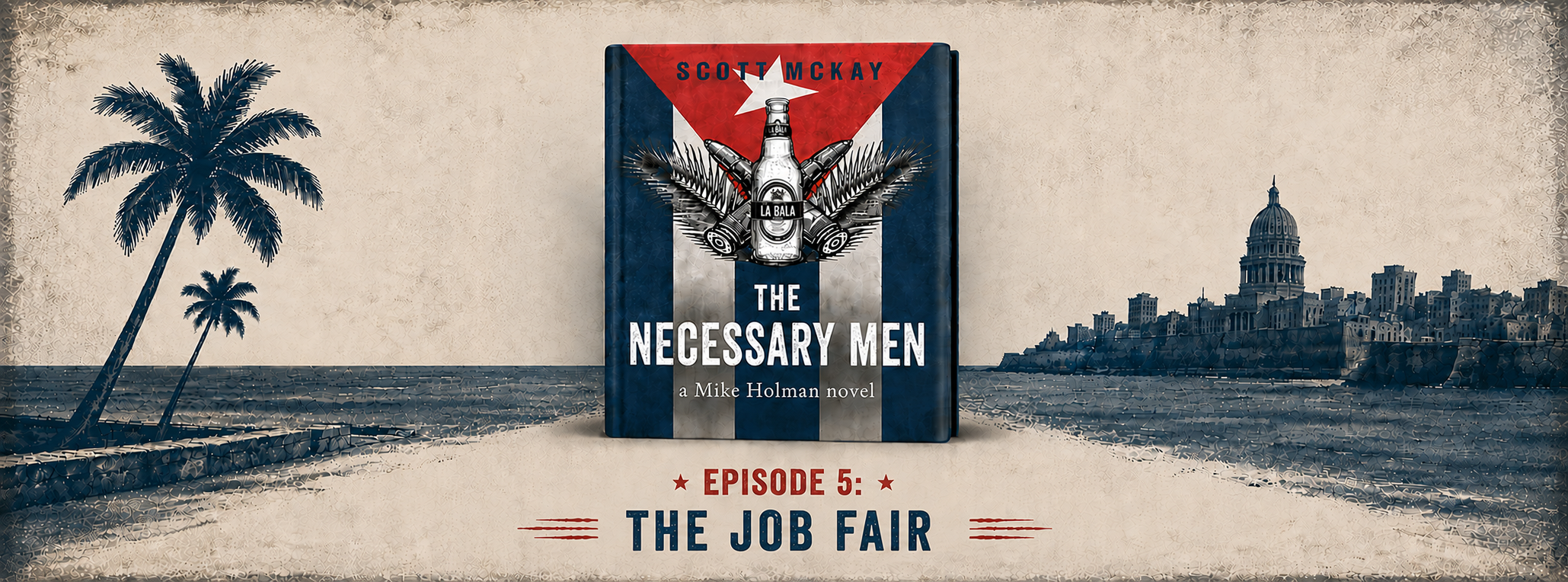
We’re now serializing the fourth Mike Holman novel, The Necessary Men, right here at The American Spectator — new episodes dropping every Wednesday and Saturday. The full book goes on sale September 26th at Amazon and the new MikeHolman.com site, and you can pre-order a signed copy right now.
Where we left off: Col. Cabrillo has paved the way for the friendly invasion of Cuba after some profoundly idiotic negotiations. And Mike and the Sino Solutions crew have landed in Gibara, earning immediate positive reviews for some very basic actions. The game has begun.
Here are Chapters Nine and Ten of The Necessary Men.
Chapter Nine
Carretera Gibara, Holguin Province, Cuba — April 18, 2026
“What is this?” Cabrillo said from the back seat, as the SUV slowed along the pockmarked road into Gibara.
“It looks like a roadblock, jefe,” said Lido, the Havana street kid Cabrillo had hired as his driver.
Lido did more than drive the new Mercedes SUV Cabrillo had shipped in from Cancun; he was one of several minions Cabrillo was grooming to fulfill his mission to build a political machine.
Vicious. Intimidating. Ruthless. Lido had what Peter Chang had called a “lizard brain” in suggesting the kind of men Cabrillo should surround himself with.
Lido was the most vicious of the bunch, and that was why Cabrillo made him his right-hand man. For example, Lido had found the kid who was now handling the cocaine run out of Gibara, which was one reason they were taking this trip.
The other was Pupo, the local party boss who wouldn’t leave Cabrillo alone with demands for a face-to-face meeting.
Plus Chang had told Cabrillo he needed to get to Gibara and take credit for what was happening there.
They waited a while, not moving. Cabrillo was surfing the internet on his phone. He was on the website of Granma, the Communist Party’s house organ, and looking at two stories.
One quoted his boss, who had done an interview with the American news outlet Mother Jones, raising the alarm about the army of Salvadoran and Argentinian troops Trumbull was massing in the Florida Keys.
The other was a more standard Granma piece praising the heroic Chinese investment in Cuban infrastructure as proof that socialist solidarity defeats Yanqui aggression. And it also quoted Peter Chang, this time in a direct interview.
“Nobody from Granma has called me for an interview,” he muttered. “They call the American who attacks America.”
“What’s that, jefe?” asked Lido, from the driver’s seat.
“Nothing. Find out what the holdup is.”
Lido rolled the window down and asked one of the people walking the other way what was causing the traffic jam. What came back was a rather vigorous string of profanity that Cabrillo couldn’t fully make out.
“What is it?” he asked impatiently when the man walked away.
“The Army has set up the roadblock. These people are all going to Gibara. They say it’s a job fair, because LCTC is hiring for all positions, and they’re coming from all over Holguin Province looking for work. But the Army is turning them away.”
“Whose stupid fucking idea was that?” asked Cabrillo. Lido shrugged.
“Enough. Get us to the front of the line, for fuck’s sake.”
Lido leaned on the horn, and the crowd of people ducked out of the way. He weaved the Mercedes rudely through the throng, finally reaching the roadblock.
A burly sergeant held his hand up to stop the SUV, then appeared at the front driver’s side window. Lido pointed his thumb backward, and Cabrillo opened the back-seat window.
“What the fuck are you people doing?” Cabrillo asked the sergeant.
“Excuse me, but who are you?” the sergeant shot back.
Cabrillo showed him his LCTC ID card.
“Dios mio!” said the sergeant. “Coronel Cabrillo! I didn’t know you’d be coming…”
“Fine, fine. Answer my question. What is this bullshit that you are doing?”
“Ordered by Ejército Oriental headquarters.”
“Holguin? This was Mendoza?”
“Yes, Coronel.”
“Maricon,” Cabrillo muttered, and got on his phone.
He had the number for Alejandro Mendoza, General de Cuerpo de Ejército, in charge of Cuba’s Eastern Army based in Holguin to the south, in his contacts. Mendoza picked up the phone on the second ring.
“Manuel,” he said. “How good of you to call.”
“What the fuck are you doing?” Cabrillo barked.
He could see the sergeant flinch at the idea that a colonel would dress down a general. Well, he’s going to get a hell of a show, Cabrillo thought.
“Excuse me?”
“This roadblock going into Gibara. There’s a job fair today.”
“I’m aware. We have to put a stop to it…”
“What the fuck for? These people are coming to work for me, you retard. Lift the fucking roadblock. Now. Or do you want our Chinese brothers to remember you? I’ll make sure they do.”
That was all the sergeant needed to see. He was jogging back to the roadblock, shouting orders, and Cabrillo saw the Army trucks blocking the road being moved off, as well as the construction barrels and sawhorses they’d laid down.
“Manuel,” said Mendoza, “there’s no need to be rude.”
“Don’t lay down any more fucking roadblocks,” said Cabrillo. “The future of Cuba does not put roadblocks in front of Manuel Cabrillo. You get me?”
“I do, Manuel. I’ll make the call.”
“Don’t bother,” he said. “I already did.”
The mass of people in front of the SUV was dividing, and the road was now clear in front of them.
“Punch it,” said Cabrillo. Lido did, and Cabrillo could see the people being left in their dust, cheering and running after them toward the job fair as they sped away.

The first thing Cabrillo noted as they drove into town along the Carretera Gibara was the airfield on the left, southwest of town. A Cessna Caravan cargo plane was landing on a freshly paved runway where an unusable grass airstrip had been on his last trip here. Trucks were everywhere, and a construction crew was erecting a large metal hangar next to a brand-new two-story Spanish colonial building that appeared to be a terminal.
And then, as the Carretera Gibara became the Ronda de la Marina as the Mercedes came into town, Cabrillo saw a forest of shipping containers stacked up on a strip of waterfront which had been a beachy wasteland. A very large, wide pier was jutting out into the bay; two mobile cranes on treads were parked on the pier.
LCTC had fast-built a small airport and a commercial port where there had been nothing, and they had done it in less than three weeks.
He saw that all of the streetlights had been replaced with new models which looked like they were made of brass, in an ornate Spanish design. Hung along with the lights on the light-poles were solar panels, and built into each unit was a box that looked like an oversized battery.
Cabrillo wasn’t sure what to make of that.
Traffic on the Ronda de la Marina was heavier than he had seen it, but Cabrillo noted that the usual roster of ancient cars and leftover trucks was supplemented by something else.
Tractors. A convoy of them making their way north along the coast road toward downtown Gibara.
“Ay, mierda,” Cabrillo muttered, as they crept along the Ronda de la Marina behind the Chinese-made YTO and Dongfeng behemoths. “Get off this road. We’re going to be late.”
So Lido took a left on Calle Justo Aguilera and then a right on Calle Cuba, taking them past something Cabrillo was stunned by.
“Stop the car,” he barked. Lido pulled over just past the corner of Calle Cuba and Calle Narciso Lopez.
A crew of locals was stacking bricks on what had been the lot of an abandoned building, clearly recently demolished, which was unremarkable – though evidence of economic activity Gibara had seen little of. But what was notable was the large piece of equipment parked on the building’s foundation.
It looked a bit like a shipping container on wheels, and it had two arms extending from its main body, with rollers covering the surface of the two arms.
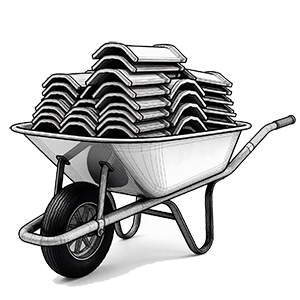
Emerging onto those rollers was what seemed to be an endless procession of terra cotta roof tiles. Men were grabbing them and stacking them on wheelbarrows and pushing them east on Narciso Lopez toward the water.
“What is this?” asked Lido.
“I wonder if that’s a 3D printer,” said Cabrillo, rolling down his window.
“Hey, muchacho,” he asked a burly local man who seemed to be the supervisor. “¿Qué pasa?”
The man told him they had set up a tile factory here because they were re-roofing all the buildings in the downtown and making them uniform.
“We’re staging the tiles block by block,” he said. “This is a good central location for south of downtown. When we’re done today, we’ll move the printer north, and then west. It makes a thousand of these every 15 minutes.”
Cabrillo nodded and thanked the man, and then Lido deposited them at Party headquarters, which sat on Calle Independencia, between Calle Cuba and Calle Maceo.
As he and Lido got out of the car, a pretty young woman in a pair of overalls and work boots walked by, a shovel in her hand.
“Nice ride,” she said as she passed, and then began humming.
That song. Boom-badaba-boom-badaba. He knew what it was. The song was a direct insult to Candela, and here this girl was, humming it in front of Party headquarters.
As they made it through the door, Cabrillo was glad he was wearing his suit jacket. Pupo kept the building absolutely frigid. He left Lido at the front desk and found Pupo in his Miami Vice suit – but this time instead of a t-shirt he had a red golf shirt under his jacket.
“Something new to wear?” he asked the man.
“Sí, Senior Cabrillo!” said Pupo, pulling his jacket aside to show off the gold-star logo on his breast. “It’s a Sino Solutions polo! In just my size. Señor Thibaud is very generous, no? Come, sit! I can offer you cerveza, but I fear it is not cold.”
“No?” said Cabrillo. “I thought cold drinks were your specialty, Señor Pupo.”
“Alas, my icemaker… la señora está muerta.”
Pupo explained that his Russian-made Biryusa model, which had made its way to Cuban shores after its assembly in 1987, had survived numerous repairs but would no longer blow cold air.
“And there is no one who can fix it,” said Pupo. “The parts are not available.”
“A tragedy,” said Cabrillo, attempting to sound sincere.
He turned to look behind him, because on the giant television mounted on the wall an American cable TV news show was on and a woman – the chyron said her name was Naomi Yanko-Munsch, and she was a congresswoman from New York – was screeching angrily about the mustering horde of Argentine and Salvadoran mercenaries in the Florida Keys that the American president, Trumbull, had assembled.
“Do you think we’ll be invaded?” Pupo asked him.
Cabrillo laughed.
“Surely you understand propaganda, Señor Pupo,” he said.
“Yes, but this is MS NOW.”
“And? Your point is?”
Pupo brushed off the question. He leaned in, as if telling a secret.
“She is lovers with Dolores,” he said.
“Who is lovers with… oh, do you mean Gramsci-Ramos?”
“Yes!” said Pupo. “Dolores left her husband and recruited this one to run in her seat when she ran for president. And then she moved to the next district over and won that seat, so the two of them could make love whenever they wanted.”
“Esas tortilleras mariconas de mierda,” Cabrillo spat.
Pupo looked flustered. Then he returned to more important matters.
“You have connections, Señor Cabrillo. Perhaps you can secure me a replacement for my appliance? Perhaps a Mabe? I hear that’s quite a good Mexican brand.”
Cabrillo began to realize that Pupo’s urgent business that required the long trip from Havana wasn’t very urgent at all.
“I think I will have one of your cervezas,” he said. Anything to get Pupo to stop talking, if only for a moment.
“Of course,” the man said, pulling his wispy hair across his scalp once again. “I’ll be right back.”
And he was, holding two bottles of La Bala which had been resting in tepid water in a cooler.
“La Bala?” said Cabrillo, as Pupo handed him one. “Esa mierda de los negratas? Why wouldn’t you drink Bucanero like a real Cuban?”
Pupo gave him a hurt look.
“Because the La Bala is free, Señor Cabrillo. It comes off the boat courtesy of our Canadian friends. And when la cerveza is a gift of your people, I drink it. Not all heroes of the Revolution drive a Mercedes-Benz, after all.”
Cabrillo just rolled his eyes and took a sip.
It wasn’t bad.
“There is a lot of activity in town,” he said. “I saw tractors, there are planes landing on a new airfield, someone built a port, the buildings are getting new roofs…”
“Yes, yes, señor. Your man Mr. Thibaud, the Canadian. He is very efficient. When he is asked for things, he is good with delivering them. It is strange that the Canadians are proving socialism can work, yes?”
“Sí,” said Cabrillo, already tired of hearing about Thibaud and taking another sip of his beer. “Why hasn’t your Canadian delivered you a new icemaker?”
“I haven’t asked him.”
“No? But you’ll ask me?”
“I have… something else I would also like to discuss with you,” said Pupo.
“Which is?”
“Marco, the young man who has the go-fast boat now. I’ve told him that when he makes his run to Exuma on Wednesday he needs to pick up two tanks of propane. He told me something terrible. You need to straighten him out.”
“What did he tell you?”
“He said jinga tu madre.”
Cabrillo laughed. “That was rude of him, to be sure. He said that to the Party Secretary?”
“These young men. No respeto.”
“Indeed.”
“You must tell him. Two tanks. And an icemaker. After all, I make all of this happen in Gibara. For you.”
“Qué?” said Cabrillo, gulping his beer.
“You heard me.”
“Jinga tu madre, cabron!” said Cabrillo. He stood up and left.
“Lido,” he said as the engine roared to life, “it’s time to seek out this Douglas Thibaud Pupo speaks so highly of. Find him.”
“Sino Solutions’ headquarters is at the Hotel Ordoño,” said Lido. “We should start there.”
He didn’t wait for Cabrillo’s assent. Lido turned the SUV to the right and drove the three blocks along Calle Independencia, turning right on Calle Peralta and parking in front of the hotel.
The sidewalk in front of the Hotel Ordoño was a beehive of activity; street vendors were selling consumer items to the small crowd milling around by the front door. Cabrillo pushed back the throng into the busy lobby and buttonholed the young lady working the concierge desk.
“I’m looking for Douglas Thibaud,” he said.
“He would still be at the job fair, señor,” she said.
“He’s the project manager. Why is he at a job fair? That’s for underlings to do.”
“Not Mr. Douglas, señor. He is everywhere there is work happening. When he isn’t having office hours in the ballroom, he is seldom here until very late at night.”
“A busy man,” sniffed Cabrillo.
“A great man,” she answered. “Mr. Douglas? Lo queremos.”
“Hmmph,” Cabrillo snorted. “The job fair is?”
“Er, it’s outdoors. Three blocks east, Plaza Da Silva, right on the water.”
Cabrillo knocked on the concierge desk and turned for the door, nearly knocking over a tall bearded man in a tan utility shirt with the Sino Solutions logo and blue jeans. He looked up, and the man looked at him, then looked away as he walked past.
“‘Scuse me,” the man said.
Cabrillo had a strange feeling he’d met the man before. But there was no time to chase forgotten faces. At the car he summoned Lido with a knock on the window.
“Let’s walk it,” he said. “Won’t find a parking space in this manicomio.”
Lido got out and the two of them walked the three blocks to the job fair, where hundreds of people were gathered at tables all over the plaza, sorted by various general job descriptions: Medical, Industrial, Financial, Computers, Drivers, etc.
A woman was on a microphone giving instructions to the job-hunters, directing them to begin at the signup tables where Sino Solutions employees, who looked to be mostly Cubans – per LCTC‘s custom, these were generally delegates of the Asamblea Municipal del Poder Popular, or Municipal Assembly of People’s Power – were registering and photographing them and then giving them picture ID cards with a QR code and a magnetic strip for a card reader, and once they were in the system, their cards opened access to a host of services the company was providing free of charge. LCTC had simply rolled in and co-opted the local Communist party structure, creating a membership organization which reminded Cabrillo of nature shows he’d seen as a child, where various insects and other creatures had climbed inside a host and eaten it from the inside, eventually turning the host into a zombie.
These people were Cuban communists who were working to sell the country’s sovereignty to Chinese state capitalism administered by…
…Canadians?
A sizable, happy crowd was standing around a table with a large sign reading “Tim Hortons.” There were large canisters of coffee and boxes piled up on the table.
Donuts, the round pastries the Americans and Canadians loved so much.
This was pure capitalism on display. At a Chinese socialist job fair.
In the corner, a group of pasty-white young people was huddled close to each other. Most were female, most had pieces of metal sticking out of their noses or lips, some had unnatural-colored hair. Cabrillo knew these were the Americans Peter Chang had recruited; the Omobba Brigades, they called them. Socialists from college campuses around the United States, who were coming to Cuba as human shields against the invasion and to help perfect the Marxist experiment.
They weren’t perfecting anything in the corner of that plaza.
Finally, a large man in a black t-shirt with the Sino Solutions logo on its back and camouflage pants, a snake tattoo making its way up his neck, stormed over to them, barking orders. They hurriedly made their way to a series of ice coolers set up along the northern edge of the plaza, grabbing bottles of water and circulating through the crowd to distribute them. The man with the snake tattoo walked away, eventually standing along the far edge of the plaza.
Near where he stopped, a tall man with a dark beard was greeting locals as they lined up to say hello. Old women were hugging him and giving him kisses on the cheek. Children were giving him high-fives. And the woman with the microphone had set it down and went over to ask him something. He nodded, and she went back to the microphone, making another announcement about the job fair.
“That must be Thibaud,” said Cabrillo.
“Seems so,” said Lido.
They made their way to him. Cabrillo introduced himself, and Thibaud gave him a polite but curt, “Nice to meet you, colonel,” greeting in response.
“I must say,” said Cabrillo, “that of the places where our enterprise has made entry, this seems to be the happiest one.”
“Well, we caught a lucky break. They’d had a busted water main and for four or five days before we pulled up there was no running water. The public works guy quit in a dispute with the party secretary…”
“Pupo?” Cabrillo chuckled.
“That’s right. Anyway, we had the equipment, so we fixed the break for them, and a couple of hours later they had water. Once word got around, we just had instant momentum.”
Just then, Cabrillo heard it. That humming. Boom-badaba, boom-badaba. A host of young women filling out forms at the Computers table were laughing and dancing to it. They weren’t singing the insulting lyrics to the song. But the melody… it was practically everywhere in that plaza.
“Do you hear that?” he hissed at Lido. “There is no discipline at all here!”
“It is a disgrace, coronel,” Lido answered.
“They must not hum that song,” Cabrillo said to Thibaud.
“A song?” he said noncommittally. “I’ve got… I don’t know anything about Cuban music. What song is it?”
He turned and saw that Pupo was walking up, but at the sight of Cabrillo, the little man turned around and walked in the other direction.
“Pupo!” Cabrillo yelled, chasing him down.
“What do you want?” the party boss snapped.
“Why aren’t you doing something about that song these people are all singing?”
“I hear no singing, Señor Cabrillo.”
“Boom-badaba, boom-badaba. That is the melody to the song calling Presidente Candela a pendejo! And you allow it in the public square?”
“I know nothing about this,” said Pupo. “Point me to someone who has called El Presidente a pendejo, and I will deal harshly with them.”
And then he turned and walked toward Thibaud, shaking his hand as he reached him.
Cabrillo wanted to slap him. Pupo was openly defying the regime, without actually doing it.
And what he realized was that he had created this monster.
This corrupt apparatchik had shaken him down for a bribe in their first meeting, and he had then shaken him down again earlier in the day, absurdly enough for a refrigerator and two tanks of propane, while sporting a free golf shirt and offering free beer, clearly from Thibaud.
He watched Pupo interact with the Canadian. He was asking the man for something, and Thibaud nodded. Cabrillo thought he could make out a response along the lines of “I’ll see what I can do” in reading his lips.
“Giving him a fucking refrigerator,” he said.
“What’s that, jefe?” said Lido.
“Never mind. Let’s get out of here. To hell with this place.”
They walked back up the street to the front of the Hotel Ordoño, a growing mass of people coming the other way.
Three large young men walking the other way were clapping rhythmically and laughing as a fourth was loudly singing.
“No hay luz, no hay luz, dímelo otra vez,” he bellowed. His friends were clapping along, producing a dembow beat as he sang.
“’Patria o Muerte’ — ¿pero qué nos das?
“Ni una vela, ni un ventilador
“Manolo grita pero apaga el sol.”
Cabrillo had heard the lyrics. “No power, no power, say it again / ‘Country or Death’ — but what do you give us? / Not a candle, not a fan / Manolo shouts but he turns off the sun.”
“Hey!” he said to the singer. “Just what the fuck do you think you’re singing?”
The kid looked at him like he was crazy.
“You got a problem, old man?”
“You can’t sing that song. It’s illegal!”
“You gonna arrest me?”
“Is that your Mercedes?” said one of his clapping friends.
“That’s a nice fucking ride,” said another one.
“I bet he’s a communist,” said the singer. “Hey old man, how about we come to your house and take all your shit? Bet you won’t mind. You’re a communist. You don’t believe in private property, right?”
“Let’s get his car keys,” said the third, and largest of the four. He looked at Lido.
“Back away,” said Lido.
“What the fuck are you gonna do about it, punk?”
Lido pulled his knife, and the four of them let out a large “Whoooooa!” and laughed again.
Cabrillo saw the second of the group pull out his own knife. It looked like a nice steak knife from one of the better restaurants in Venezuela.
“You want to go, maricon? I’ll stick this so far up your ass it’ll come out of your mouth.”
“Let’s go, Lido,” Cabrillo said.
“Yeah, that’s right,” said the singer. “Get the fuck out of here, pendejo.”
“Pendejo!” said the second kid, putting his knife away. “Boom-badaba, boom-badaba, boom-badaba-Ma-No-Lo!”
And the rest of them followed him toward the plaza, joining him in singing the rest of the chorus. “Boom-badaba, boom-badaba, boom-badaba-Pen-De-Jo!”
The rest of the people walking along the street were either laughing or giving Cabrillo and Lido looks which ranged from curious to highly unfriendly.
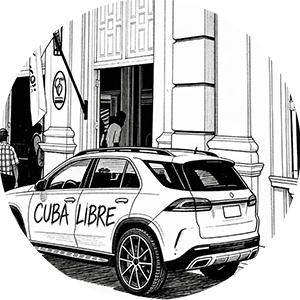
And when they reached the car, someone had smeared “Cuba Libre!” in… some substance, on the driver’s side door.
Cabrillo made Lido stop at a CUPET Servicentro on the way out of town.
“Get that shit off the car,” he said, referring to the smeared “CUBA LIBRE” on the driver’s side door panels.
And while the old station attendant held the trigger on the gas pump, Lido worked the windshield squeegee on the door panels in what looked like a losing battle against the… blood? Chicken grease? Motor oil? Goose shit? That whoever had decided to tag a big shot’s vehicle with a rebel slogan had used.
And at the next island, the LCTC trucks were lined up to refuel. From tanks it was certain had been topped off by a LCTC tanker truck that had brought gasoline or diesel from an LCTC boat from the Bahamas.
Cabrillo, meanwhile, was putting a call to a contact at DSE, the Dirección de la Seguridad del Estado.
About this Douglas Thibaud.
Cabrillo wasn’t just angry about the open anti-regime chaos among the people in Gibara. He’d seen some of that in Moa, in Macabi, in Ciego de Ávila, and even in Santa Clara. But in Gibara, the rebellion was coupled with an almost cultlike allegiance to a foreigner whose role was supposed to be that of a mere functionary.
And Gibara crystallized a pattern Cabrillo began to recognize – LCTC was an operation that didn’t move like Chinese state investment. Chinese state investment moved slowly, bureaucratically, with enormous overhead and constant political friction. What was happening, especially in Gibara, moved like someone who had done this before and had his own systems.
They had a 3D printer, and they were re-roofing every house in downtown Gibara. That wasn’t just stormproofing; it was refurbishing the aesthetic of the town.
Chinese state capitalism didn’t do this.
It certainly didn’t build personal relationships with the people it was colonizing. These Canadians – were they actually Canadians? Thibaud’s accent wasn’t very strong – were very warm with the locals in Gibara. And while it was more noticeable there, Cabrillo had to admit that was a pattern as well.
Thibaud had told him they had repaired a water main on the first night they landed in Gibara. That was certainly not the type of activity a Chinese state capitalist enterprise would take on right off the boat.
And his boss Peter Chang, and the few office workers around him, were the only Chinese in the entire operation that Cabrillo could see. It was laden with Canadians, with Mexicans, Venezuelans, Dominicans, Bahamians and others.
Plus Chang’s American college students. Cabrillo knew they were window dressing and a middle finger pointed at the Trumbull administration. Nothing more.
“Coronel,” came the voice on the other end of the line. “Douglas Thibaud? I have his file.”
“Tell me, Rafael.”
“He’s clean.”
“His accent is not Winnipeg. I confess I am not an expert. But his English sounds almost like a broadcast TV…”
“The file says he spent much of his childhood in Ohio. That would explain a faint accent, or none, among the Norte Americanos.”
“Hmmph. Where did he go to college?”
“McGill University. Worked for the Ontario government as a highway engineer, then a project manager for several non-governmental organizations, in Asia, Africa and the Caribbean, before getting hired by Sino Solutions.”
“Family? Friends?”
“Nothing has come up.”
“I want him watched. Something is off with this man.”
“Jefe,” said Rafael, “there is nothing in the file…”
“I don’t care. There is an irregularity. I smell it.”
“As you say, jefe.”
So Cabrillo hung up.
Lido had paid the attendant and gotten back behind the wheel.
“You can still see it,” he said, “but you have to look close. I will get it detailed when we’re back in Havana.”
“Fine,” said Cabrillo. “Let’s go.”
Then he called his boss.
“Hi there, Manuel!” said Chang. “How is Gibara?”
“It’s better than I expected,” said Cabrillo, “but something about this operation is unusual.”
“Well, I’ve heard very good things.”
“Yes, and there are good things. They’ve built an airport and a seaport, and it appears they’ve hired hundreds, if not thousands, of people for all manner of projects. Very impressive.”
“Wonderful! I hope you pressed the flesh. This is the kind of success story that plays very well in the media. We should call Granma and have them send someone down.”
“Yes, but I’m not sure this is the right thing. What do you know of Douglas Thibaud, the project manager in Gibara?”
“Nothing. He’s a Sino Solutions guy. They did say he’s been with them a while and he’s a star. Why?”
“Nothing,” Cabrillo sighed.
“Well, did you meet him?”
“I did. He’s… quite charismatic.”
“Good. Maybe we’ll have Granma interview him. It’s a good story, don’t you think? China and Cuba working together, and the spirit of socialist cooperation attracts Canada’s best and brightest? Honestly, I should call Rachel Maddow and my friend at the San Francisco Chronicle. I’ll bet they’d love that story.”
“Your American friends certainly seem to have bought into your story about Salvadorans and Argentines in the Keys.”
“Yeah. That? Genius, don’t you think? Do you know that the Omobba Brigade recruitment is nearing twenty thousand? Every time the hype about an invasion grows, it’s worth another thousand signups!”
“Peter, from what I can see, these children have nothing whatsoever to offer to the Revolution.”
“Oh, come on. They’re being recruited from the best colleges!”
Cabrillo rolled his eyes, exchanged a few pleasantries with Chang, and hung up.
“Get me home, Lido,” he said. “I’ve had enough of Holguin Province.”
Chapter Ten
Nassau, Bahamas — April 24, 2026
We’d held a giant job fair at the Plaza da Silva, which is the big open-air area close to the fishing piers at the head of the Bahia de Gibara, next to the Bateria Fernando VII, which is the old Spanish fort guarding the bay. We needed to do that because the list of projects that LCTC was touching off had greatly exceeded the “Canadian” and other foreign workforce we’d recruited.
Which included the Omobba Brigade.
That was really sort of a red herring, and it was something Simon, who understood communist propaganda, and Pierce, who just had a mean sense of humor, had cooked up.
Initially it was a joke. But Simon thought there was some actual value to it – and specifically attaching Omobba’s name was something he said must be done.
“This is bait for the American Left, if part of the project is to discredit them,” he said. “Hanging them on their own propaganda by dragging thousands of them to Cuba to see first-hand how capitalism outperforms socialism, and then to attach Omobba’s name, when he lifted the Cuba embargo, and it did little to change Cuba’s fortunes, will discredit him as well.”
“I just think it’s a funny turn on the Lincoln Brigades in the Spanish Civil War,” said Pierce. “Dumb Americans inserting themselves into somebody else’s problems with zero plan and the wrong ideas to fix things? Omobba Brigades. Has to be.”
And then Simon gave it to Peter, and wouldn’t you know it, but there was Peter, making a call to Omobba and getting him to do a video supporting those kids joining the LCTC program. Peter stood up an NGO called Helping Hands Cuba, which was officially the organization recruiting and deploying these kids.
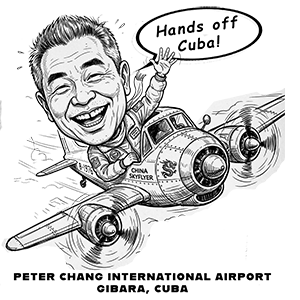
Which made it even funnier that Peter and the Hyphens and everybody else on the American Left were skinning their Facebook and X profiles with “Hands Off Cuba.” Matt Walsh did a five-minute video that went viral calling them a bunch of Lee Harvey Oswald wannabe idiots who didn’t even know their own organization was explicitly calling for hands ON Cuba. But that didn’t stop the slogans.
And everybody was calling the Helping Hands Cuba kids the Omobba Brigades.
The foreman of the little Omobba Brigade which showed up in Gibara was a guy named Pat Stensland. He was going by Trevor Pullman-Luker as part of the Omobba Brigade ruse. Pat had been with Pierce at Liberty Point during the fight with the Venezuelans; he’d been a drone operator and had brought holy hell down on the poor bastards who got sent to invade Guyana. But with this, he’d grown out his hair and styled it in a man-bun, and he’d set himself up with a Fu Manchu moustache and goatee situation, and he no longer looked like a guy who’d ever been to Liberty Point.
And when he got off the Cessna Caravan at PCIA – yes, we were still calling it Peter Chang International Airport – with his 12 kids, Pat – er, Trevor – made sure to tamp down expectations.
Read more From ‘All In’ to Tap the Brakes: Josh Shapiro Redefines Pennsylvania’s Tech Boom
“I have two good ones and ten utterly useless babies,” he said when he visited my office on the ground floor of the Hotel Ordono.
Seven of his kids were from Oberlin, which wasn’t a surprise; what was a surprise was that Trevor told me one of them was legitimately helpful. Three of them had come from Reed College in Portland, and none of those were any good. One was from Bethune-Cookman, and Trevor said that kid was the best of the bunch, and one was from Harvard.
“The Harvard kid is so freakin’ dumb I’m shocked she can tie her shoes.”
“We’ll get her some slip-ons,” I said.
“We already did.”
I told him I was surprised the Reed kids weren’t any good. “Isn’t that where Steve Jobs went?”
“Yeah. For a semester. These brats ain’t Steve Jobs.”
Trevor also said it would be a very good idea for me to stay away from the Omobba Brigade kids, at least while this was still supposed to be a Chinese organization.
“Why is that?” I asked.
“Because the one thing these kids are all aware of? Politics. They don’t know anything about that, either, but they absolutely know who Mike Holman is, and Doug, I hate to tell you, but you’re a dead ringer for him.”
I wasn’t all that surprised. Nobody really thought my disguise was very convincing. So far, though, that hadn’t really seemed to matter.
But I decided to take Trevor’s advice. So when the Omobba Brigade kids showed up, they basically got the stiffarm from the big shots working for Sino Solutions – specifically, me, Hal Gibson, Jason Belcher and Jack Gray (or Gray Jackson, officially). Selena interviewed them and found out that the Bethune-Cookman kid, who was a black half-Cuban sophomore named Felipe Rogers, and one of the Oberlin kids spoke Spanish.
So they got put to work signing people in at the job fair. The rest of them were told to make themselves useful, which of course ended in them standing in the corner and whining that their phones didn’t work in Cuba.
Which was of a piece with pretty much everything we got out of these kids. They were getting course credit for working for us, per some stupid deal Peter Chang had cut with some left-wing college-oriented non-profit, and so far all they’d learned is that it’s really hot when you’re in the tropics with no AC and in the Third World, they actually want you to do physical labor.
“I’m glad this is your problem and not mine,” I told Trevor.
“I’m just here for the flip,” he said. “I have a speech all ready for that payoff.”
We ended up signing up 1,367 people at that job fair. They were literally walking in from all over the place. I’d heard we might have had a lot more, but the Cuban Army had set up a roadblock on the 221, the Carretera Gibara, coming into town.
Why they’d do that I had no idea, but my guess was that the regime was starting to get very nervous about the fact that our operation, and the two dozen others like it across Cuba, was beginning to get quite a bit larger than Candela’s people expected. It was one thing to fix the water and bring in a bunch of cereal boxes and paving equipment. It was something else entirely when we started taking over the power grid and rebuilding the houses around town.
And we hadn’t even gotten started yet with the real stuff we had planned. We were really just staging for the flip.
Jack had come up with the idea of signing in all the folks coming into the job fair to apply for work and getting them biometric ID cards with QR codes and EMV chips. He’d put that together right from the very beginning, and it was the work-through of a great idea Stan and Trent – the two financial guys who understood this stuff a whole lot better than I did.
More about that later.
And I stood there watching people roll on in and get processed – every applicant got a card – and then find their way to tables where they could see job openings we’d posted for just about everything, because the mission encompassed all of the functions of commerce and industry in Gibara, and put themselves on a list to get called in for training, assessment, and hiring as we stood up operations.
Perhaps the most interesting of the new signups was a young guy, maybe 30 years old, who said his name was Osvaldo Reyes. He was from Baracoa, he said, and he was a doctor. Osvaldo had done his signup, and then he marched up to Selena and asked who was in charge, and she brought him to me.
He said he was a doctor, and that I needed to put him to work.
“I thought the regime had healthcare all taken care of,” I said. Osvaldo laughed.
“The regime makes slaves of the healthcare people,” he said, as Selena translated. “I had to go on a medical mission to Nicaragua. There are thousands of us there. Candela bills the Nicaraguans first-world prices for us. We get to live in a barracks, and we have DI minders watching us. I deserted and went to Panama and got Panamanian papers through a friend, and now I’m here.”
“You were in Panama and could have practiced medicine there, and you chose to come back to Cuba?” I asked him. “Are you crazy?”
“It’s my country,” he said. “I heard about La Compañía Todo de Cuba, which is grammatically wrong by the way, and I was hoping that you would hire doctors. Are you really paying $400 Canadian per month?”
“We’re paying five times that for doctors around the country,” I said, “but I don’t think we planned on staffing a medical clinic here in Gibara.”
“Well, you should,” he said. “I’m told the doctor at the state clinic here is a complete incompetent.”
I didn’t doubt that, but I also didn’t know anything about medicine. I got Osvaldo’s information and passed it on to Gloria Gonzales, who was the head of LCTC’s medical division. Three weeks later, we’d set up a medical clinic in Gibara and Osvaldo – that wasn’t his real name; he just went by what was on his fake Panamanian papers – was running it.
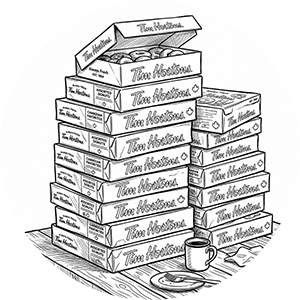
I noticed that the Tim Hortons table at the job fair was a win. We’d flown in a thousand boxes of Tim Hortons donuts from Toronto, and we set up coffee and donuts for the folks. That was a Pierce move; he thought it was a great convincer that all of us working in Gibara really were Canadians.
Cubans knew diddly squat about donuts. They have their own stuff, which, to be honest, is a little better when it’s executed correctly. But they ate every last one of those donuts, and they drank all the coffee.
These people knew not to let anything go to waste. Enforced poverty will do that to folks.
All day the Gibarans, and their neighbors, came rolling in. One old lady who came over and hugged me said this was the biggest deal she’d ever seen in town and she’d lived there her whole life.
I told her she hadn’t seen anything yet.
And then I saw him.
Manuel Cabrillo. He was not exactly Douglas Thibaud’s boss, though he was up the food chain at LCTC from the project managers. Cabrillo was the recruiter; he was who Peter Chang had hired to grease all the local bosses, the Aldo Pupos of the world, so that we could get a foothold into these towns all over Cuba.
I don’t know if Peter was just being a massive prick in giving us Cabrillo, or what, but it didn’t sit well with anybody in our organization.
Because Cabrillo was the Cuban who’d been in command of the Venezuelan Army’s attack on Liberty Point. And Cabrillo’s people, when they landed in Mahdia, the Guyanese town more or less next door to Liberty Point, had not behaved themselves well at all.
Not to mention Pierce’s team lost guys in that fight. Of course they were salty about it.
They all knew Cabrillo was working for LCTC. They were all talking each other down as to their reactions if they’d meet him. Belcher had said “it’ll be a miracle if I’m not slitting that sonofabitch’s throat the minute he comes around,” for example.
What I was hoping was that since he had 25 different LCTC sites going, plus some others that were about to come online, that doing the other part of his job – namely that he would also be a field liaison between the home office in Havana and the sites themselves – would go by the boards.
No such luck, though, because here he was. And he was walking right up to me with a skinny, sinister-looking young guy in tow.
“You must be Douglas Thibaud,” he said. “I am Manuel Cabrillo, LCTC.”
“Nice to meet you, colonel,” I said, in as friendly a voice as I could manage, and I shook his hand in as friendly a manner as I could manage.
“I must say,” he said, “that of the places where our enterprise has made entry, this seems to be the happiest one.”
“Well, we caught a lucky break,” I told him. “They’d had a busted water main and for four or five days before we pulled up there was no running water. The public works guy quit in a dispute with the party secretary…”
“Pupo?” Cabrillo said, laughing dismissively.
“That’s right. Anyway, we had the equipment, so we fixed the break for them, and a couple of hours later they had water. Once word got around, we just had instant momentum.”
As I was talking, I could see that he was getting distracted. I knew why. From the time the first folks started showing up at the job fair, there had been a persistent vibe going.
Selena picked up on it first.
“They’re all humming Omar’s song,” she said. “You’ll hear it.”
It was actually her doing. She had the Conduit app on her phone, and she’d been spreading it by vouching in the app for all the locals she came in contact with and giving them the signup code. Conduit started spreading like wildfire all over Cuba – and Selena swore she had nothing to do with it, but immediately after these people started getting the app, that song was being shared around.
She blazed the trail. Con Fuego and their Manolo Pendejo song were setting the woods on fire.
And a group of teenage girls who were standing next to the table where people were signing up to do office work started dancing and humming the Manolo Pendejo song, right there practically in front of Cabrillo. I didn’t get the impression that he was a regime guy per se; they said he was retired from the Cuban army, but he was certainly at least regime-adjacent.
And Cabrillo knew exactly what the song was.
He turned three different colors. I thought he was going to wade into that crowd of girls and… do something. I don’t know.
Instead, he turned to that skinny thug he had with him, and he barked at him in Spanish. The thug said something in agreement.
Then he turned to me.
“They must not hum that song,” Cabrillo said.
I had no idea what he wanted me to say.
“A song? I’ve got… I don’t know anything about Cuban music. What song is it?”
That wasn’t exactly Nathan Hale, but on the other hand Douglas Thibaud wasn’t in Gibara to police the humming of the people.
Douglas Thibaud also wasn’t in Gibara to tell Manuel Cabrillo to eat shit and die, as much as Mike Holman might have wanted him to.
But apparently it was enough, because Cabrillo found another victim. Poor Aldo Pupo, who was walking up to see me and then immediately tried to run off when he saw Cabrillo.
That didn’t work. Cabrillo ran over and jumped poor Pupo’s shit, and I thought the little commie apparatchik was going to wet himself. But instead, he smarted off to Cabrillo and walked over toward me.
Cabrillo and the skinny thug were staring laser beams through him. And when Pupo got to me, those laser beams were going through me as well. I didn’t think that was a particularly awesome development, but on the other hand it wasn’t like Cabrillo could fire me.
Send the army to arrest me? That he could do. And yes, it did occur to me that was something which could happen. But it wouldn’t happen today, and it also wouldn’t happen without Cabrillo getting to revisit his previous experiences with my friends.
“Mr. Douglas,” said Pupo, “you are doing such wonderful things here. I come to congratulate you.”
“Well, thanks, Secretary Pupo,” I said.
“Please, do call me Aldo. We know each other well enough, yes?”
Now I knew he was going to ask me for something. He was even wearing the Sino Solutions shirt I’d given him under his Miami Vice suit.
“OK, Aldo,” I said, as I watched him lick his fingers and pull a few of his hairs across his scalp. “What can I do you for?”
“I hate to ask,” he said, and I knew immediately that was a lie, “but it seems that my icemaker has finally breathed its last. And as it happens, the connection I was using for propane seems to be drying up. I was wondering if you might help with either or both.”
“I’ll tell you what,” I said. “Let me see what I can do.”
And then I saw Cabrillo, who was watching me talk to Pupo, storm away, his skinny thug minion hustling after him.
Hal Gibson walked up just then.
“I see you met Cabrillo,” he said.
“I don’t think he recognized me. You guys think this disguise is no good, but you’re wrong.”
“Yeah, well… he almost ran me over at the hotel. I thought sure I’d get made.”
“Seems like we survived first contact with the enemy,” I said. “Hopefully we won’t see that asshole again.”
“And how,” said Hal.
The morning after the job fair, I left Gibara.
I insisted on getting out of there for a long weekend. The next morning at the crack of dawn I caught a ride from the hotel to PCIA – everybody knew that Peter Chang International Airport was not what we were going to call the place, but the name stuck anyway, and what was more, that smart-ass logo had actually gone up on a sign along the access road, tacked up on one of the palm trees Belcher’s guys lined the road with – to a waiting Cessna Caravan bound for Nassau.
I had people to meet in Nassau.
I had my wife to meet in Nassau.
It’s not that I’d had no contact with PJ since I left. Conduit, the crypto-comms app her brother had built which she’d had an only very passing interest in, had provided us with a secure link that we could use to keep up. But at the end of the day, that wasn’t enough for each of us.
It certainly wasn’t enough for me.
The flight from Gibara on that Caravan – loaded as it was with a few crates of the local tobacco, as Trent, who was big into cigars and had a friend in Miami who was a very high-end cigarmaker, wanted to give his guy a sample of the local resource to see what he thought – took three hours. And I stank of tobacco leaves by the time I got off the plane, and the car took me to Lyford Cay.
You don’t know what Lyford Cay is? Well, it ain’t the Holiday Inn.
Lyford Cay is a gated private estate community, members-only club for James Bond villains. It’s been the ultra-wealthy enclave in the Bahamas since the 1950s. Sean Connery had a house there.
This was the kind of place where Pierce Polk either owns a villa outright – he doesn’t – or he can get one through a phone call – which he did for us. You can’t get through the gate without a member vouching for you, so it’s naturally secure without looking like it’s trying to be.
Private beach, private marina, full staff at the villa. No lobby, no other guests, no one who’d recognize Mike or PJ Holman – or Douglas Thibaud, for that matter, or notice Pierce Polk and Simon Lim arriving for dinner.
I got in mid-morning. It would be afternoon before PJ got in. So I had time for a shower, a change of clothes, and a quick lunch – the chef did a little lobster bisque and crab salad thing which was a considerably better meal than anything I’d had in two months.
And then, like an idiot, I laid down on the couch and crashed. I’d had maybe three hours of sleep the night before, and that couch was more comfortable than the bed I’d been in at the Hotel Ordoño. By a lot.
I pulled out my phone – I was Mike Holman again, and I’d picked up my Mike Holman ID, phone and everything else in Nassau – and went on Amazon and ordered a king-sized Purple mattress and bed frame. We had one of those in the guest bedroom at the house, and I wasn’t going to suffer one more night on that bed back in Gibara.
And a Samsung fridge with an icemaker.
Amazon’s delivery information promised both could be delivered to Sino Solutions’ Nassau address in 48 hours, which I found to be a very promising schedule. That transaction completed, I decided to take a nap.
PJ was leaning over me when I woke up. I think she’d kissed me awake.
“Wow, you’re here!” I said. “I was dreaming about you!”
“You were? What was I doing?”
“Oh, running through a field.”
“How very unusual,” she deadpanned.
“Well, you were naked.”
PJ laughed.
“OK, sit up,” she said. “I want to get a look at what Cuba has done to you.”
And when I did, she gave me a very persnickety inspection.
“You are… thin as a reed,” she said. “I mean, I would almost say you’re sickly, but if I’m being honest you probably could have lost some weight when you left.”
“Well, isn’t that the sweetest thing!” I said, and the next thing I knew I was being attacked by a horny half-Chinese bombshell. I at least managed to get her into the bedroom before the show started.
A little while later, she’d opened her laptop and put it in my lap.
“OK, here’s what you missed,” she said.
And it was a video, 11 minutes long. A highlight video, actually, from Little Mike’s baby-cam that PJ kept on him 24/7.
Most of it was the kid making funny faces. At five months old, you don’t really have the highest of expectations. But then, about two-thirds of the way through, PJ said, “Oh, here it comes.”
And Little Mike was lying on the floor surrounded by the dogs. And PJ, who was spending her time training Robby the goldendoodle and Thor and Sancho, the two Dogo Argentinos, to roll over.
All of a sudden, on the video, the kid rolled over.
“Wait, what?” I said, and I replayed that part.
I looked at her.
“You taught my kid to roll over?”
“Uh huh.”
“What’s next? Is he gonna beg, shake hands and bark on command?”
“I mean, you’d better come home soon, because all of that stuff is on the table.”
“I think my marriage is actually going to the dogs right now.”
“I know, right?”
“Listen, and I didn’t want to do this…”
“Mike, you don’t have to do the whole thing with apologies and whatever. I get it, because I want to do it, too. But we don’t need to. We had a fight at the worst possible time, and I was terrible, and I threw you out of the house having no idea that you’d be leaving. And you left because you had a job to do, and ever since it’s just been…”
“Terrible,” I said.
“Oh my God. I’m actually rewatching Corazon de Cana now. I’m so bored without my husband.”
“Well, I can’t say that I’m bored. My problem is something else. But I’ve never missed anybody as much as I’ve missed you.”
“But you’ve had Marisol to hang out with,” she said.
“You mean Selena. And she turned out to be a really good assistant. But the poor girl is not the company that my wife is.”
“You did that well,” she said, and then she came in close for another one of her inspections.
“Would you stop?” I said.
“You aren’t actually fooling anybody with this beard and that hair, are you?”
“As a matter of fact, I am. I fooled Manuel Cabrillo.”
“Cabrillo… from Guyana? That Cabrillo? You saw him?”
“I didn’t tell you this, but your dad hired him to be the recruiter who signed up all the local bosses for our deal. He was in Gibara two days ago and I shook his hand.”
“I’m… Jesus, Mike.”
“It’s… something. I’ll give it that.”
“That’s scary.”
And I told her about Pupo and Cabrillo, and Claudio, and 3D construction printers. And Peter Chang International Airport. And all of the things she wasn’t getting from our short little Conduit conversations. I pulled out my laptop and showed her the hundreds of pictures I’d taken of the place and the people.
The stories lasted until dinner, which was a giant filet mignon per a demand I’d sent up the line before arriving, with all the most fattening sides I could imagine. And then the stories continued until PJ fell asleep in my arms.
I had her laughing, mostly, but when I told her how deprived and abused were the people of Gibara, most of whom barely had three hours of electricity per day and couldn’t even eat once a month at a Five Guys on what they made before we got there, her mood changed, and she grew somber.
“I’m sorry for what I said,” she said.
“What do you mean?”
“That those people had 60 years to get out, and that I don’t want to sacrifice my family for them. That was so wrong.”
“I don’t think it was,” I said. “It was how you felt, and honestly, you have a right to feel that way.”
“But it’s sooo selfish,” she said. “Do you think that makes me a bad person that I felt that way?”
“Nothing could make me think that, PJ.”
“I don’t feel that way anymore. But I do want you home. I’m coming apart without you.”
“You have three dogs, a kid, and a Peloton, and a standing dinner invitation at Stan and Trina’s. I appreciate the sentiment, but you’re gonna be all right. And this isn’t going to last forever. When the flip comes, I’ll be able to fly back and forth. And actually, you’ll have a chance to come down.”
“Oh, I don’t know about that.”
“By the time I invite you, it will be safe and not actually awful. And honestly, the hotel has potential.”
“I looked it up online. It does have some charm.”
“The interior décor in the rooms is not to your standards. And I ordered a new bed for my room. It’s a Purple, like the guest bedroom has.”
She didn’t respond. I’d talked her to sleep. I couldn’t have asked for a better outcome.
And in the morning, PJ had a declaration.
“Here’s what we’re gonna do,” she said. “You’re gonna give me all of your pictures, your videos, and your notes and those reports you were telling me about, and I’ll start putting it all together for you.”
“Meaning?”
“For your book! Are you even writing it?”
“I… plan to, but honestly, PJ, I’m so busy with doing the thing that I’ve really only got time one day a week to write about it, and that’s more like a corporate reporting thing.”
“Let me see one,” she said, so I opened my laptop and found one for her.
“Mike! This is super-detailed! This is basically book notes right here.”
“I guess it is.”
“OK, so… I have everything you’ve sent me on Conduit, you give me the pics and the reports, and I’ll just be your book assistant. Or editor, or whatever. I’ll assemble it for you, so when you have time, you can just make it your own and add the Mike Holman flourishes.”
“Something tells me I’m not going to get to say no to this.”
“Why would you? Besides, you need to give me a project. And this is the one I want, because this way I can stay connected to you without getting involved in the… thing.”
I gave her a funny look.
“What?”
“The book is all you really care about. The rest of this stuff you’re almost hostile to, but the book gets you going.”
“It’s always been that way, you know.”
“It has. You’re right. I never realized it until now. You got all jazzed up when we first met over me interviewing you for the podcast, and then you got into doing the photojournalism thing during the war in Guyana, and we really fell in love while we were staying at Lake Lanier and I was doing Pierce’s biography…”
“And I made you do podcast interviews on our honeymoon, which got you put in jail,” she said. “That’s when I stopped. But yeah. I like Mike Holman to be Mike Holman. And the book is you being you. That’s what I want to be involved in.”
“Hmmmph,” I said.
“OK, come on. I’ve never been on a private beach before. Do you think they’ll let us do the nude sunbathing thing?”
“PJ Holman! What has gotten into you? And pregnant on top of that!”
“Hah! I don’t even have a baby bump yet. I still look good.”
“Yes, you do.”
Late that afternoon, Pierce came in. PJ pretended that she was angry at him for taking me away from her, but she couldn’t hold that act for long.
“You did somewhat make up for it,” she said. “I’m assuming you’re the one responsible for getting us this James Bond villa to stay in.”
“It’s a James Bond villa? Because Sean Connery had the next one over?”
“Shut up! He did?”
“Uh huh. I’d have gotten us that one, except Randi Weingarten has it now.”
“What?”
“Besides, this one is nicer. Seriously.”
She couldn’t tell if he was kidding. He wasn’t.
I let them catch up. Pierce was a little bit like PJ’s brothers. He picked on her relentlessly, and she gave as good as she got. Since she was reduced to drinking Sprite on account of the new arrival to come, Pierce and I were splitting the bottle of Pappy Van Winkle that he’d brought – which made her really jealous; PJ wasn’t a big bourbon drinker, but she did think the Pappy was some delicious stuff.
“You know that you massively fucked this thing up, right?” I said.
“I did? How?”
“La Compañía Todo de Cuba. You know that’s grammatically wrong, right?”
“It is? It’s The Everything Company of Cuba. I mean…”
“They haven’t stopped telling me it should be La Compañía de Todo Cuba. It’s pretty freaking embarrassing.”
“Well, shit.”
“So from now on… or at the flip, we’re just going to call it Todo. Or Todo de Cuba.”
“I mean,” PJ cut in, “that actually works better because everything you’re doing is basically one giant to-do list.”
“That’s not a bad point,” said Pierce. “Hey, Mike, you’re the one there. Call it what you want. But I’d capitalize TODO. It’ll look cooler on the signs.”
And a little before sundown, Simon made his way in.
I introduced PJ to him.
“You do favor your father, to an extent,” he said to her. “But I can tell that you’re your mother’s daughter. She must be exquisite.”
“Thank you,” said PJ. “That’s very kind.”
We all retired for a while, because Pierce had suggested that we all get dressed up for dinner. Given the surroundings, and the fact that we were going to sit down on the covered dock over the water, it was a really good idea.
“Simon Lim is the guy who hired my dad to be the face of this escapade,” she said, thinking out loud while I zipped up her dress for her. “I’m trying to decide if I hate him.”
“He might be the most interesting man in the world,” I said, pulling her hair aside and fastening the clasp on her necklace.
“Oh, haha. And he doesn’t drink often, but when he does, he drinks Dos Equis?”
“Just… talk to him. I don’t know that I’ve ever been more impressed by somebody I’ve met. The courage and discipline this guy has is… I feel like my life changed a bit when I met him. Noticeably so.”
“Why?”
“Because he was born into the Politburo elite in Beijing and he rejected everything they believe in, when it was 100 percent not in his interest to do so, and yet he played the game long enough to put himself in a position to do exactly what he’s doing.”
“Huh,” PJ shrugged, stepping into her pumps. “Well? Am I suitable for dinner with billionaires?”
“I think you’ll do.”
“OK, this won’t,” she said, turning her nose up at my interpretation of a proper bowtie and making me stand there while she re-tied it.
At dinner, PJ took my advice. But she did more than talk to Simon. She interrogated him.
“I don’t understand how you’re involved in this,” she said. “Like, Cuba. Why do you care?”
“Because Beijing wants to have a cat’s-paw just off America’s shore just as they see Taipei is for America. Though Canada is a much more significant vassal for China than Taipei is for the United States.”
“And helping Pierce and Mike turn Cuba over will, what? Embarrass the regime in China?”
“More than that. After the way they’ve been rebuffed in Venezuela, and in Peru, Ecuador, Bolivia, Argentina, Panama… it’s a full retreat. Canada will be next for them. Trumbull will see to that. And when Beijing is no longer expanding its reach, it will have no choice but to face its internal house. Which is not in order.”
“Meaning?”
“I will not live to see a free China. I don’t think Mike or Pierce will see it. But you, PJ. You might. What we do now helps to lay the groundwork for that day, just as the small victories for freedom won in the 1950s and 1960s laid the groundwork for the Berlin Wall to fall.”
“It doesn’t hurt that if we’re successful, and we will be, nine million people will get to live free by the end of the year,” said Pierce.
“That is very true,” said Simon. “I cannot free my people. But what we do in Cuba will free them, and that is the Lord’s work.”
“Mike said that you converted to Catholicism and nobody knew. How did that happen?”
“I was on a trade mission to Korea, and I met a Catholic priest there who changed my life. I began reading St. Augustine, Aquinas, and some of the others, and from there I scoured all of the great Western texts. I found truth there that I never saw in Mao’s writings.”
“But you stayed in that system.”
“I had seen the dissidents. Pitiful men living on the charity of the West, despised by their own people as traitors. I didn’t hate them for their choices, but it seemed to me that if one is to reject his country for a higher purpose, then that rejection should carry far more weight than a simple cry for attention.”
“So you played the game, earned your wealth and power, and now you’ll turn it against the regime for maximum effect. Is that it?”
Simon nodded.
“But what’s going to happen when they know this is actually Pierce’s project? They won’t be happy. That’s going to hurt your business, right?”
Simon shrugged.
“It’s of no consequence. I can’t spend all the money I have, and I have no heirs. What legacy I will leave will be in the things I’ve done.”
“How do you…”
“I lost my first wife to ovarian cancer. My second was killed in a train derailment. I learned that all the riches in the world guarantee nothing.”
“And here I’ve been whining because I haven’t seen Mike in two months,” she said.
“Believe me,” said Simon, “I understand how you feel more than you can know. But let me say this to you – savor the time you have together. Everything in this world is finite. It will end. Whether it ends now or 50 years from now is not what matters. What you make of the time you have is everything.”
She looked at me. I smiled at her.
“Your husband is doing… a great thing,” said Simon. “He has become a great man.”
“I already knew he was a great man,” said PJ. “I knew that when I met him.”
“Yeah, but there’s being a great man, and there’s being a necessary man,” said Pierce. “Right, Simon?”
Simon nodded.
“What’s that mean?” PJ asked Simon. “A necessary man?”
“It’s a theory of mine. God uses the best of us to do his most important work, and the very best, the necessary men, are the ones who save the world.”
“Interesting,” she said.
“Jesus. Peter, the rock on which the Church was built. Charles Martel. George Washington. Lincoln. Wellington. Eisenhower. Lech Walesa. Pierce here. The names are plentiful. Without them? The darkness. The abyss. My country is what it is because of the absence of necessary men. Yours is not. And your husband is without question one of the necessary men. The world is better for his exploits.”
“Maybe,” she said. “But he’s necessary to me, too.”
“Awwwwww,” said Pierce, and the next thing I knew he’d pulled me over and had me in a headlock.
Pierce was laughing. I was laughing. PJ was laughing.
Simon smiled. That was the happiest I think I ever saw him.
“I know, I know,” PJ said. “It’s corny.”
It wasn’t.
I’ll always remember that dinner.
Coming Saturday, August 29: Episode 6 of Scott McKay’s The Necessary Men.
Catch up and follow along at “The Mike Holman Novels at The American Spectator.” Signed copies are available for pre-order at MikeHolman.com!
Read more The $40 Trillion National Debt and the ‘Budget Hawk’ Ruse That Led to MAGA
About the Author