Not a fun topic.
But events, as they say, have forced America’s hand on the subject.
Nearby, my colleague Scott McKay has posed the question: “Is the Lindsay Clancy Case a Windfall for the GOP?” (RELATED: Five Quick Things: Is the Lindsay Clancy Case a Windfall for the GOP?)
Read more Economic D-Day
I have been pondering a version of this question myself. History records that periodically X event happens somewhere in America or even beyond in the wider world, and that event, politically speaking, can and does resonate in the American political spectrum.
Taking a look back at American history, it is telling that some theoretically unconnected event can in fact launch, however slowly or rapidly, a significant movement that sooner or later overwhelms the American body politic.
Examples?
On Nov. 22, 1963, as history vividly documents, President John F. Kennedy was assassinated in Dallas, Texas. With JFK gone, the decision about what should happen with American policy in Vietnam was left to successor President Lyndon B. Johnson. And suffice to say, almost immediately things started to not go well for LBJ and America.
At first, newly re-elected in 1964, by the summer of 1965 LBJ was informing the American people, who had re-elected him in a thunderous landslide, that he was sending some American troops to Vietnam.
And then.
Today, a full 63 years after JFK’s death, there is a Vietnam War memorial on the Washington Mall that has engraved in stone the names of the 58,318 Americans who gave their lives fighting that war.
As those around in the day (ahem!) can attest, the memory is vivid of the daily reports of American soldiers killed or wounded in Vietnam. All brought to the country daily in reports from the likes of CBS News anchor Walter Cronkite. The war happened slowly, its slow-motion growth only gradually taking over the nation’s daily life. But take over that daily life it did. For sure. It eventually ended the Johnson presidency after a slow-motion build-up of American troops in Vietnam, paving the way for the candidacy of an American politician many in the day thought was a long-finished politician — then former vice president and 1960 loser (to JFK) Richard Nixon.
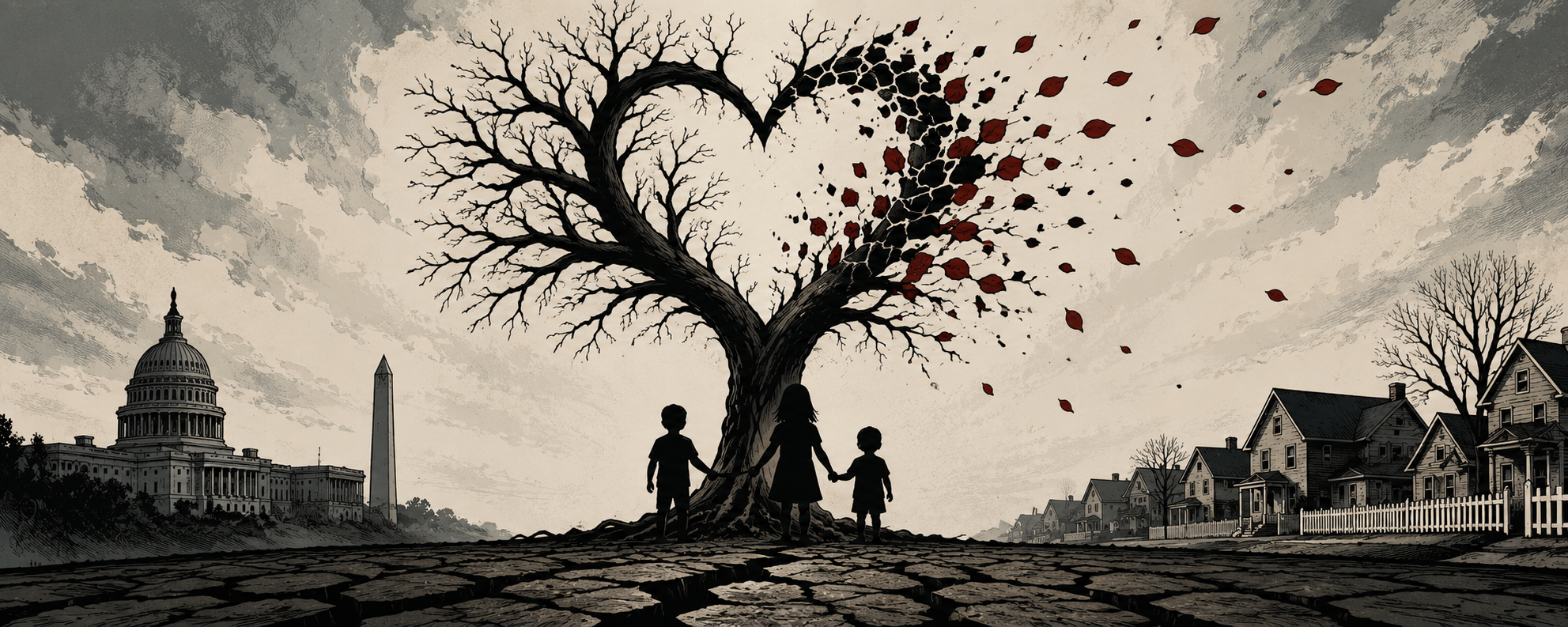
The memory of that particular national horror and its slow-motion, piece-by-piece beginning comes to mind as the news of one Lindsay Clancy and the murder of her three children edges into the public memory.
What, it is fair to ask, is going on here? Is this a simple, if horrific, one-off of a mentally impaired mother who just went over the edge and suddenly turned on her own children?
Or, more dangerously, is this only the slow-motion beginning of stories from across the land about some crazed, mentally disturbed parent or child learning of the idea of killing one or more family members? Then taking it upon themselves to resolve some internal family pressures by extinguishing the lives of this or that family member? Be that family member a child, a spouse, a parent, or a sibling?
Read more Iryna Zarutska, Lindsay Clancy, and the Politics of Who Gets Mourned
Over there in Psychology Today one finds that there is already a term for this kind of thing: “Familicide.”
There was this headline from earlier this very year: “Familicide: Domestic Abusers Killing Multiple Family Members,” with the subtitle, “Three U.S. women die each day, killed by current or former boyfriends or husbands.”
This grim story reports these four key points:
-
Incidents where a man kills multiple family members occur about once every five days in the U.S.
-
This is a higher rate than in most other wealthy countries, due to the relatively easy access to firearms.
-
Abusers who threaten to kill themselves or others pose a risk—especially if they have access to a gun.
-
A jealous substance abuser with a gun poses a particularly deadly combination.
Written in February, months before the Clancy case, it reports: “A recent case of family annihilation made the news when a father from Washington state murdered his three young daughters. He shared custody of the children with the mother, who had apparently sought a protective order against him.”
One could go on. And on and on and on with the tales out there about one family member killing others. In truth, one suspects millions of Americans would be astonished at the frequency and number of reports of what could easily be described as a “death culture” or, as it is really called, “Familicide.” (RELATED: Lindsay Clancy, Motherhood, and a Culture That Has Forgotten Sacrifice)
But if the horror and details of the Clancy case do nothing else? One suspects, like the slow-motion attention paid to American involvement in Vietnam so many decades ago, more and more Americans — for reasons good, bad, or indifferent — will slowly come to realize that whether the immediate issue is abortion or euthanasia or something else, America has a problem.
And once understood, the political question will be what to do about it. And will this “death culture” become a hot-button election issue?
Read more American Veterans Are Fighting — and Dying — for Ukraine
Stand by. The election season is here.
READ MORE from Jeffrey Lord:
Ossoff Plays the Sexist Card
Todd Blanche and the Justice Department Independence
Thanksgiving Saved Again — Francesca Hong Lost
About the Author