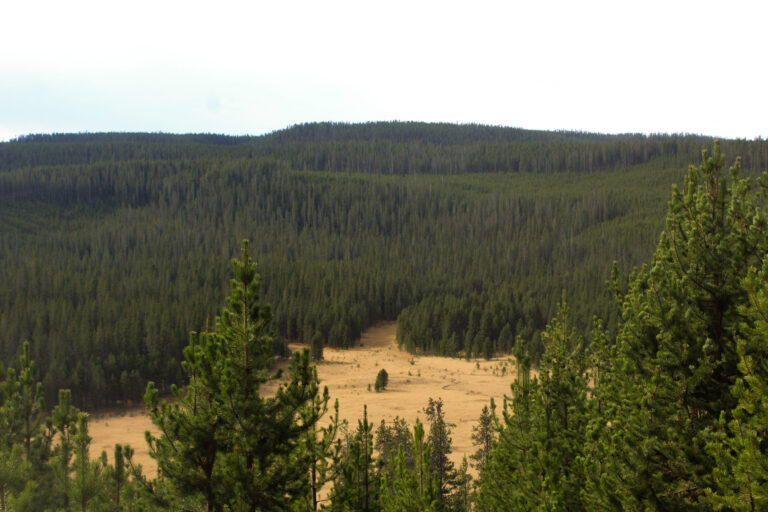
One January I drove from Atlanta up to Charlottesville to present a research paper at the Southeastern Conference/Association of Asian Studies meeting at my alma mater UVA. I stayed on the scenic Blue Ridge Parkway for as long as conditions allowed. Authorities closed sections out of caution over possible snow and ice, forcing detours off the Parkway before I could rejoin it farther north. I budgeted the extra time and distance into the itinerary to allow myself to take in the rustic grandeur of the landscape and culture of the Appalachian region.
Read more DSA’s ‘Solidarity’ With Cuba Looks a Lot Like Solidarity With Castro
In addition to the natural beauty and rustic culture the southern Appalachians, contain significant lithium deposits that would reduce our dependence on foreign supply chains. The question is whether we can develop (mine and process) those resources responsibly while preserving the character of the landscape that people actually live in and value. The evidence suggests it is possible.
Self-reliance requires the ability to process ore mined on American soil into usable form inside the United States rather than shipping it abroad for conversion.
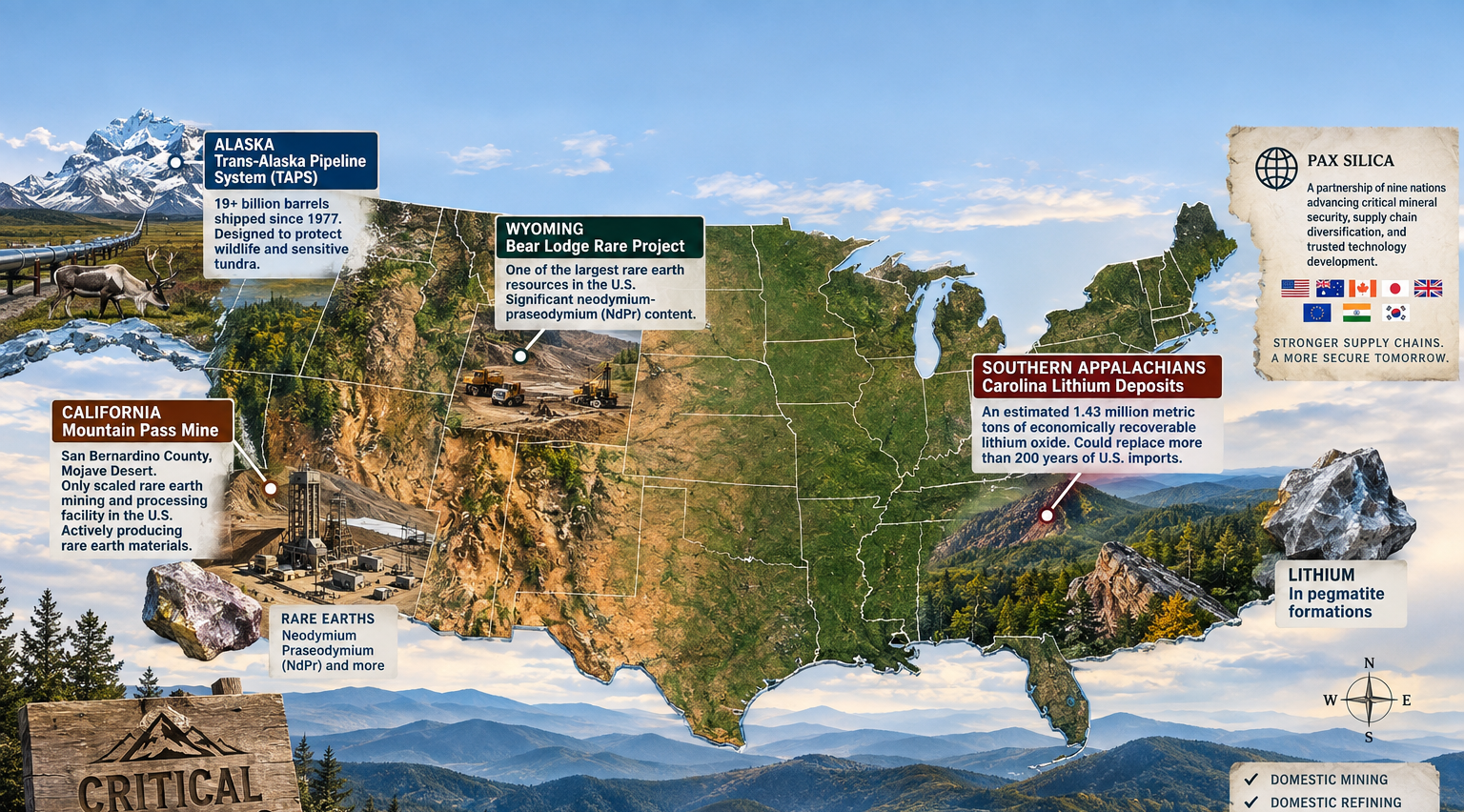
The U.S. Geological Survey reported that the southern Appalachian region, concentrated in the Carolinas, contains an estimated 1.43 million metric tons of economically recoverable lithium oxide. That amount could replace more than two hundred years of current U.S. imports. The lithium sits in pegmatite formations, coarse-grained rocks that formed deep underground and now lie within the rolling ridges and forested slopes of the Appalachians. Developing this lithium would directly cut reliance on foreign sources while creating jobs in the region.
How would this effect the natural beauty of the Appalachians? Readers may picture large open pits and permanent damage to the forests and streams that define the Blue Ridge. However, hard-rock mining can be managed to keep long-term impacts minimal.
For example, selective extraction targets the mineral-bearing zones rather than removing entire hillsides. Operations move in phases, so reclamation begins on finished sections while work continues elsewhere. Once mining ends on a parcel, crews recontour the land to match the original slopes, replace topsoil, and replant native trees and vegetation.
Within a decade of mineral extraction, the area can again support forest cover instead of remaining an industrial scar. Furthermore, water management needed in mining uses closed systems that prevent sediment and chemicals from reaching nearby streams. Methods such as these have been proven at other mineral sites in the Appalachians such as at the high purity quartz mined by Spruce Pine Mining, in Spruce Pine North Carolina.
Read more One Night Only : The Covid Lockdown Movie Nobody Meant to Make
The lithium deposits in the southern Appalachians represent one of the most significant recent domestic discoveries, but they are not the only option. Other critical mineral resources exist across the country, including one of the largest rare earth resources in the United States at Wyoming’s Bear Lodge Rare Project in northeastern Wyoming with significant neodymium-praseodymium (NdPr) content. Further southwest there is established production in California at the Mountain Pass Mine which is located in San Bernardino County, California, in a remote area of the Mojave Desert near Nevada. It is currently the only scaled rare earth mining and processing facility in the United States and is actively producing rare earth materials.
Alaska provides another clear example of responsible resource extraction on a large scale. In 2025 the Trans-Alaska Pipeline System (TAPS) passed the milestone of having shipped over 19 billion barrels of oil since it started in 1977. TAPS crosses sensitive tundra with elevated sections that and include wildlife passages built into the design. Monitoring and reclamation requirements were part of the project from the beginning. It delivered decades of energy security without turning the landscape into a permanent industrial zone.
International partnerships can reinforce domestic efforts. Anthony J. Constantini argued in a December 16, 2025, National Interest article that the Pax Silica initiative advances the administration’s National Security Strategy by coordinating critical mineral procurement, infrastructure investment, and trusted technology development among nine partner nations. Built on complementary strengths rather than ideology, the coalition of countries would diversify supply chains, reduce dependence on China, and strengthen economic resilience alongside military deterrence.
America needs greater self-reliance on critical minerals for energy security and industrial supply chains. China does not simply mine a large share of the world’s lithium and rare earths. It controls the critical middle step of refining. Australia and other countries dig most of the raw lithium out of the ground, yet China converts roughly 65 to 73 percent of global supply into the battery-grade chemicals that manufacturers actually need. For rare earths the concentration is even higher: China processes about 90 to 91 percent of the world’s output into usable oxides and metals. Even ore mined at Mountain Pass in California still travels to Chinese plants for separation. That refining bottleneck, more than mining itself, is what leaves American industry and defense systems exposed.
The United States needs both domestic mining and domestic refining capacity. Self-reliance requires the ability to process ore mined on American soil into usable form inside the United States rather than shipping it abroad for conversion. Achieving that goal while keeping ecological impacts limited is not simple, but it is possible through focused permitting reform and disciplined project design.
READ MORE:
Let People Use America’s National Forests
If Sex Matters in Women’s Sports, It Matters in Women’s Prisons
Head Start Isn’t the Answer: Strengthen Parents, Don’t Replace Them
Alex Littlefield, PhD, is a former Assistant Professor of International Trade in Taiwan and Teaching Fellow in China. His research areas include international trade and regional security. His most recent publication is a book chapter on China’s nuclear forces in Learning to Love the Bomb: Understanding the American Nuclear Arsenal (Cambria Press, 2026). He lives in Washington, DC, and serves as an independent scholar and Fellow with the National Institute for Deterrence Studies.
Read more The Ultimate Summer Vacation Glossary
About the Author