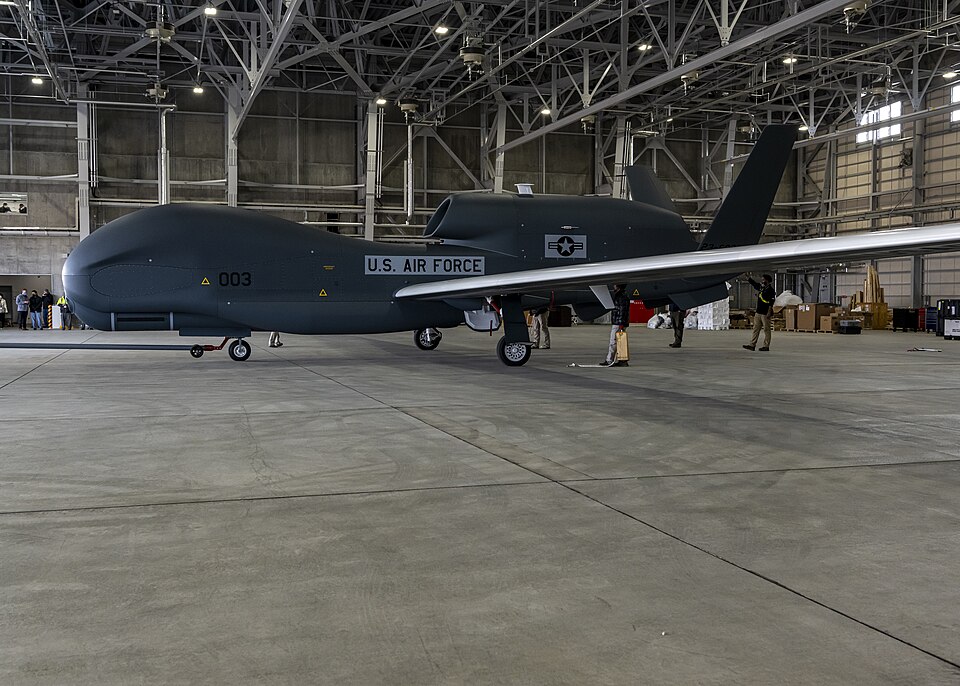
An RQ-4B Global Hawk sits in a hangar at Misawa Air Base, Japan, March 12, 2022. The RQ-4B is a high-altitude, long-endurance, remotely piloted aircraft with an integrated sensor suite that provides global all-weather, day or night intelligence, surveillance, and reconnaissance capability. The addition of this aircraft to the Japan Air Self-Defense Force’s inventory directly supports the defense of Japan and peace and stability in the Indo-Pacific region. (U.S. Air Force photo illustration by Senior Airman Antwain Hanks)
Japan appears to be preparing for future wars with fewer soldiers at its disposal by turning to the “future” of warfare: drones. On Aug. 4, Japan’s Cabinet its 2026 defense white paper, which places drones and AI-enabled systems at the center of the country’s defense strategy. Japan is only the latest military power to adjust to the lessons of unmanned warfare from Ukraine and the U.S.–Iran war, joining the ranks of the United States, China, Russia, and more.
Read more How American Indifference to the SAVE Act Ensures Long-Term Decline
Japan’s aging population and demographic woes are not new phenomena, and many have likely heard about them before. But the accelerating nature of the demographic decline does seem to be impacting the country’s defense strategy, as Tokyo realizes it must soon account for a military with insufficient manpower. Japan’s 2025 census counted approximately 123 million residents, down three million from 2020 — the largest five-year decline on record — while the fertility rate fell to another record low of 1.14. In 2025, deaths exceeded births by more than 900,000. (RELATED: Japan at the Crossroads)
Those are existentially bad statistics for Japan as a whole, but they present an especially pressing problem for a military already struggling to fill its ranks. The Japanese Self-Defense Force recruited only 11,000 people out of its goal of 15,000 in 2025, while the force as a whole is only at 90 percent of its authorized strength. The shift in doctrine toward producing and implementing systems of unmanned warfare reflects two realities: adjusting to developments that have reshaped modern warfare, and also acknowledging that the growing scarcity of personnel is a problem to be planned around rather than solved head-on.
The issue of shrinking manpower comes as Japan’s security environment is as “complex as it has ever been since the end of World War II,” to Defense Minister Shinjiro Koizumi. The minister added that “the possibility of serious situations taking place that might shake the foundation of the stable postwar international order cannot be ruled out.”
Rather unsurprisingly, China with the situation rightfully concerning Japan. China has escalated tensions across East Asian waters through growing carrier operations beyond the first island chain, persistent pressure on Taiwan, and increased dangerous encounters with Japanese aircraft. The white paper even China as “an unprecedented [sic] and the greatest strategic challenge” for Japan to respond to in future policy. (RELATED: Reagan–Thatcher, Trump–Takaichi, and Cold War II)
Read more How Pittsburgh Became the Early Alarm Bell for the DSA’s Rise
Japan is an island nation, and thus naturally has an extensive coastline and numerous remote territories, let alone its dependence on maritime trade. It cannot allow a lack of manpower to create gaps in its defenses and deterrence against China.
Japan’s proposed is the Synchronized, Hybrid, Integrated, and Enhanced Littoral Defense system — mercifully shortened to SHIELD. The planned system, intended to be up and running by 2027, is to have a large arsenal of inexpensive aerial, surface, and underwater drones for use in surveillance, intelligence gathering, and strikes.
Japan’s turn toward unmanned warfare is a sensible response to the rewriting of conventional warfare by the Ukraine war, and also the demographic reality. Drones will allow smaller militaries like Japan to defend more territory and place fewer soldiers in danger. (RELATED: Drones Are Not Enough)
The wars in Ukraine and Iran have firmly demonstrated that drones have a cemented place in the war doctrine of the future. But drone systems alone cannot produce the future generations upon which a military — and ultimately, a nation — depends. The security problems facing Japan require more than technological adaptation: They require cultural renewal from a society willing and able to produce its next generation.
Read more BREAKING! Gen Z Haz Sad Because 2 Poor 2 Date
READ MORE from Henry Zavalick:
China Makes Panama Pay for Saying No
Brazil’s Lula Claims US Election Meddling, but Lacks Evidence
The Cult of Andrew Tate: Modernity’s ‘Men Without Chests’
About the Author