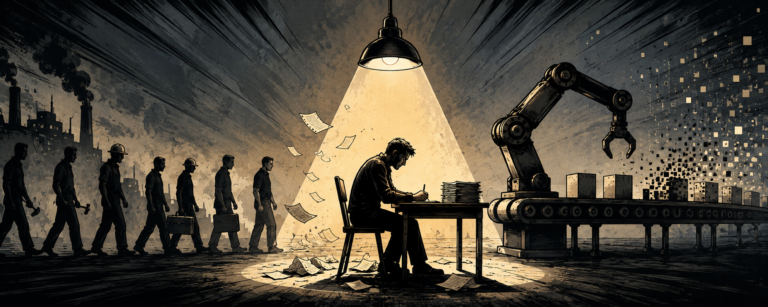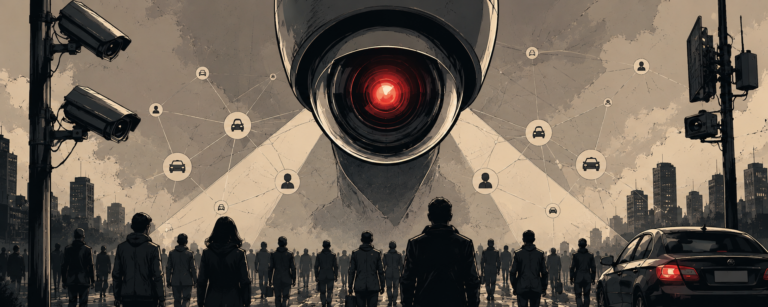
Artificial Intelligence has become so important it has dominated everyday news, garnering responses worldwide even from the Pope, some responses good and others less so.
Read more Fauci Pleads the Fifth Before Congress
This author has been warning for years that AI is a special threat to today’s philosophical conservatism. This was initially made clear in reviewing a book three years ago by former Google CEO Eric Schmidt, MIT Dean Daniel Huttenlocher, and Henry Kissinger, and clarified again a year later, using data evidence from formal studies.
The family is the source of the habits that we’re going to need to cultivate the next generation.
The American Enterprise Institute study testing large-language AI models was the most disturbing. The AI leaders OpenAI, Google, Anthropic, xAI, and DeepSeek were tested on how they would rate 26 prominent U.S. think tanks for accuracy on 12 criteria regarding their research quality, their institutional character, and their moral integrity. Center-Left tanks had the highest AI rated correct interpretative scores (3.9 of 5), Left and Center-Right tanks tied at 3.4, with Right AI accuracy scores trailing at 2.8. AEI’s evaluators concluded that the higher AI rating correlations for Left think tanks came from a bias within the AI models themselves, a conclusion somewhat conceded by Copilot 360 in referencing a MIT Press study.
My personal experience as a conservative scholar regularly searching AI responses to academic questions is that AI answers generally require many secondary questions to find serious conservative solutions. Without an extended series of specific references, searches do not identify books and articles I know exist and are available and relevant to the request.
Still, the basic AI problem is even more fundamental. AI is by its very nature backward-looking in time. Today’s conclusions meant to influence future action are exclusively based upon data from the past. Knowledge from the past may seem neutral in nature but AI models choose data from the “best” intellects. These data sources tend to be progressive analysts at Harvard, Yale, Princeton and company, from foundations like Gates, Open Society, Lilly, and Ford, and Left-leaning think tanks generally. These are then interpreted favorably for consumption by the masses by the New York Times and the other elite mass media.
It was the philosopher Plato who taught that the “poets” — or we would say the intellectuals and those who popularize them — will always shape a culture and will rule by how they explain it to the masses. But the unique flaw of AI is that it only draws from past facts or past predictions to opine on solutions for future problems. And that past must be dominated by the sources the AI programmers consider the most valid — academic studies, government research, and so forth.
AI cannot rely on “forward facts” because they have not yet occurred. So all it can do is guess — and guesses for the future are simply guesses, AI or otherwise. With AI stocks recently hitting the lowest average values since April 2025, the market itself has begun to bring AI under some control. Yet, excessive control by government is the greater possibility, as Wall Street Journal conservative columnist Holman Jenkins has long feared, especially by the national government’s basically independent national intelligence community.
Read more America’s Population Crisis and the National Debt Time Bomb
From a longer-term perspective, former conservative Senator and university president Ben Sasse has argued that an AI world is inevitable and “no matter what the illiberal Left or the increasingly illiberal” Right claim, the solution can’t be done with policy levers in Washington,” which by the subsidiarity principle he rightly claims represents the true conservative position.
There are optimistic scenarios, but Sasse argues that America today finds us in a new “civilizational-warping crisis of institutional decline,” of personal loneliness, of distrust for institutions and for neighbors. Until recently we lived in a world of measurable atoms but AI changes us into dealing with limitless bits. This will move us from a life of work to a life requiring much greater emotional balance and character development, only achievable by individual deep reading of serious books, through a new sense of hard work, and even engaging in technical sabbaths and world travel for broader understanding and social learning.
Sasse argues that the great divide in the future “will not be race, class, or income. It will be between people who master the tools of technology and those who outsource their affections and their habits to these tools and algorithms. The future will be awe-inspiring for the first group, and life will be miserable for the second.”
Most conservatives “grew up fearing the dystopian future of George Orwell, but it turns out the dystopian future of Aldous Huxley was much more likely.” In that AI dominated future world, “we face the tyranny of ubiquitous pleasure, of easy comfort — the soft despotism of ‘Brave New World,’ not the brutal authoritarianism of 1984.”
For most of us the challenge will start at home.
The family is the source of the habits that we’re going to need to cultivate the next generation. Nobody loves your kids as much as you do. Loves are local and creating the habits that foster the love of the good, the true, and the beautiful begins at home. The bad news of what I’m suggesting is that it’s deeply inconvenient. The good news is that parenting has always been inconvenient. It’s the ultimate inconvenience.
The general threat from an AI dominated world is to self-government, individual freedom, and limited national government power. Conservatives especially must take the AI challenge seriously as a fundamental threat that will require a serious and wholesale commitment to avoid that Brave New World future.
READ MORE from Donald Devine:
Is the Supreme Court the Final Word on the Constitution?
The Declaration, the Constitution, and the Consent of the Governed
Can Liberty Survive Without a Soul?
Donald Devine is a senior scholar at the Fund for American Studies in Washington, D.C. He served as President Ronald Reagan’s civil service director during his first term in office. A former professor, he is the author of 11 books, including his most recent, The Enduring Tension: Capitalism and the Moral Order, Ronald Reagan’s Enduring Principles, and Thinking About Freedom and Tradition, and he is a frequent contributor to The American Spectator.
Read more Honda OKs the Death of the Stick Shift
About the Author